

Vatican Declines to Join Trump’s “Board of Peace,” Citing Concerns Over Structure and Authority
Vatican Declines to Join Trump’s “Board of Peace,” Citing Concerns Over Authority and Structure
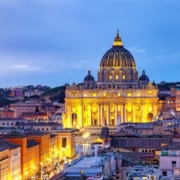
The Vatican has formally declined to participate in President Donald Trump’s newly launched “Board of Peace,” an international initiative focused first on Gaza reconstruction and then broader conflict resolution. For Christians who follow world events with an eye on Bible prophecy, the story matters because it highlights a recurring end-times pattern: global crises intensifying while leaders push for new international mechanisms to manage war, borders, and stability.
Believers should approach these developments with sober discernment. Scripture warns that the last days will be marked by turmoil and accelerating convergence (Matthew 24), while also reminding us that lasting peace will not come through human institutions alone (Isaiah 9:6).
The Vatican’s Decision: “We Will Not Participate”
Cardinal Parolin Cites the Holy See’s Unique Nature
Cardinal Pietro Parolin, the Vatican’s secretary of state, said Feb. 17 that the Holy See “will not participate in the Board of Peace,” explaining that the Vatican’s diplomatic identity is not the same as other states and that the board’s structure raises unresolved questions.
Parolin also pointed toward the United Nations as the primary venue for managing major international crises, indicating the Vatican’s concern about parallel structures developing outside established global frameworks.
Reuters report via Al-Monitor
EWTN News coverage
What the “Board of Peace” Is Trying to Do
Gaza Reconstruction, Outside the U.N. Model
Public reporting describes Trump’s Board of Peace as an international body convened to coordinate Gaza reconstruction and related stabilization efforts, presented as an alternative approach to the traditional U.N.-led system.
A key point often missed in headline debates is scale: reconstruction needs are immense. PBS reported that U.N., World Bank and EU estimates place the cost of rebuilding Gaza in the tens of billions of dollars, underscoring why nations are debating who should oversee the effort and how funding and governance would be managed.
PBS report on Gaza rebuilding costs and Board of Peace pledges
White House Reaction and International Questions
“Deeply Unfortunate,” the White House Says
The White House criticized the Vatican’s decision, framing participation as a constructive step toward stabilizing Gaza and other conflict zones. While the administration has emphasized legitimacy through multinational membership, critics and observers have raised questions about transparency, authority, and whether a new body could compete with, duplicate, or sideline existing institutions.
The Guardian explainer on who is involved
Why Christians Should Pay Attention
Global Governance Trends and Prophetic Themes
Endtime Ministries does not rush to label every international initiative as a direct prophetic fulfillment. But we also don’t ignore broader trends Scripture tells us will characterize the final generation: expanding global coordination, pressure for centralized solutions, and growing efforts to manage war and commerce through international structures (Daniel 7; Revelation 13; Revelation 17).
Jesus warned that “wars and rumors of wars” would continue as part of the birth pains leading toward the end (Matthew 24:6-8). In that light, believers should watch the Middle East carefully—not with fear or speculation, but with clarity, prayer, and confidence in God’s sovereignty.
Understanding the End Time in the Middle East
Bible Prophecy
What We Know — and What We Don’t
Here’s what is established by credible reporting so far:
-
The Vatican has declined participation, citing the Holy See’s unique status and concerns about the board’s structure.
-
The Board of Peace is being positioned as a multinational mechanism with Gaza reconstruction as a major focus.
-
Major questions remain about mandate, accountability, and how such a body would interact with the U.N. system and other international actors.
What we do not yet know is how durable the board will be, what enforcement power—if any—it will have, and whether it can achieve measurable outcomes amid entrenched realities on the ground.
A Pastoral Word: Discernment Without Fear
Christians should not be swept into panic or political frenzy. We can acknowledge human attempts at peacemaking, pray for leaders, and care about the suffering of civilians—while remembering that true peace will ultimately come only under the reign of Jesus Christ.
This is a moment to stay informed, test narratives against facts, and measure developments against Scripture—steadily, not sensationally.