
U.S. Blockade of Strait of Hormuz Signals Rising Middle East Tensions
U.S. Blockade of Strait of Hormuz Raises Stakes in Standoff With Iran
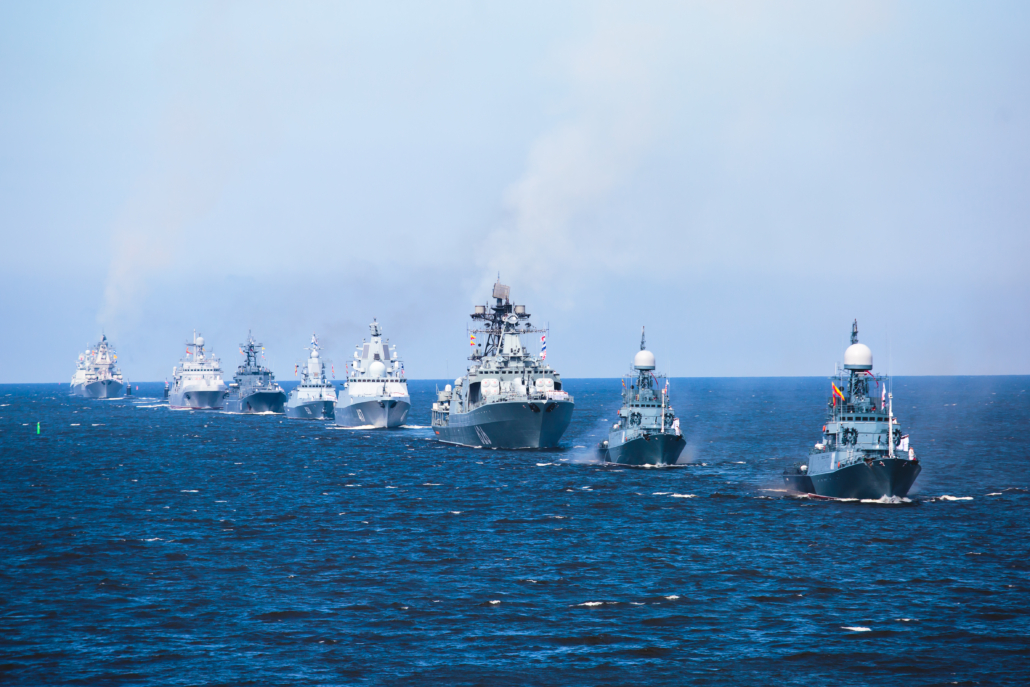
 The United States’ new blockade targeting Iranian ports has pushed tensions with Iran into a more dangerous phase, and Christians should pay close attention. This is not only a military and diplomatic flashpoint. It also involves one of the world’s most important energy chokepoints, a disputed nuclear program, and a Middle East power struggle that continues to keep Israel and the region on edge.
President Donald Trump’s administration moved forward with the blockade after weekend negotiations failed to produce a peace deal. Former CENTCOM Deputy Commander Vice Adm. Robert Harward said the action should be viewed as the opening move in a broader pressure campaign against the Iranian regime, not the end of the matter. Based on public reporting Monday, the blockade is aimed at Iranian ports and coastal areas, while transit between non-Iranian ports through the Strait of Hormuz is still being allowed.
Why This Matters Far Beyond Iran
A Chokepoint for Global Oil and Trade
The Strait of Hormuz is not a minor regional shipping lane. The U.S. Energy Information Administration reported that in 2024 and the first quarter of 2025, flows through the strait accounted for more than one-quarter of total global seaborne oil trade and about one-fifth of global oil and petroleum product consumption. The EIA also said around one-fifth of global liquefied natural gas trade moved through the strait in 2024. That means any disruption there can quickly affect fuel prices, shipping, inflation and economic stability far beyond the Middle East.
That is why this story matters to believers who are trying to understand current events through a biblical worldview. A regional confrontation can become an international crisis very quickly when it touches oil supplies, trade routes and military deployments involving several major powers. As the U.S. Energy Information Administration noted, even alternative pipeline routes in the region can only offset part of the disruption if Hormuz is constrained.
Oil Markets Are Already Reacting
The market response has been immediate. The Associated Press reported that U.S. crude rose 8% to $104.24 per barrel and Brent crude rose 7% to $102.29 after the blockade announcement. AP also reported that U.S. Central Command said the blockade would be enforced against vessels of all nations entering or departing Iranian ports and coastal areas, even while non-Iranian transit through the strait remains open.
That kind of price movement is a reminder that even limited military or naval measures in the Persian Gulf can produce global consequences. Christians should understand that these developments are not isolated headlines. They are part of a broader pattern of instability in the Middle East that can affect nations, economies and alliances almost overnight.
Iran’s Nuclear Program Remains Central
The Nuclear Issue Has Not Gone Away
At the center of this confrontation is still Iran’s nuclear program. The International Atomic Energy Agency said in its Feb. 27, 2026, report that after military attacks on Iranian nuclear facilities in June 2025, the agency halted verification activities and withdrew inspectors for safety reasons. The report also states that Iran signed into force a law on July 2, 2025, suspending cooperation with the agency.
That matters because it means the nuclear dispute is not operating in a climate of confidence or transparency. In other words, this is not simply about shipping lanes or sanctions. It is also about unresolved questions surrounding uranium stockpiles, inspections and compliance. As the IAEA reported in its safeguards update on Iran, verification concerns have remained serious since last year’s attacks and Iran’s suspension of cooperation.
What We Know, and What We Do Not
What we know is that the U.S. blockade is real, it has taken effect, and it comes after negotiations failed. We also know the Strait of Hormuz remains a critical global trade artery, and that Iran’s nuclear file is still clouded by restricted oversight and unresolved safeguards issues.
What we do not know is how far this pressure campaign will go, how Iran will respond, whether other powers will become more directly involved, or whether the current crisis will lead back to negotiations or toward broader conflict. That distinction matters, and believers should resist the temptation to fill in gaps with certainty where the facts are still developing.
A Biblical Worldview Without Reckless Speculation
Watch the Region Carefully
For Christians who study Bible prophecy, the Middle East remains a region to watch closely. Scripture repeatedly points believers toward Jerusalem, Israel and the surrounding nations as central to the closing era of human government. Passages in Matthew 24, Daniel and Revelation remind us that wars, rumors of wars, international pressure and regional upheaval are part of the prophetic landscape, even if every headline is not itself a direct fulfillment.
This is where careful discernment matters. We should not force prophetic conclusions onto every event. At the same time, we should not ignore the convergence of military tension, economic fragility and growing international instability in the very region Scripture highlights.
For additional prophetic context from our ministry’s perspective, readers can reference Endtime’s teaching on the Middle East and Bible prophecy and prophecy-focused programming on Only Source Network.
A Sober Response for Believers
This moment calls for more than political reaction. It calls for prayer, sobriety and discernment. Christians should pray for peace, for wisdom among leaders, for the protection of innocent lives and for a clearer understanding of the times in which we are living.
The world may frame this primarily as an oil story, a military story or a negotiation story. In one sense, it is all three. But for the Church, it is also a reminder that the nations are restless, the Middle East remains volatile, and God’s Word continues to provide the only trustworthy lens for understanding where history is headed.