
Practice or Prophecy? The Day a Red Heifer Became a Turning Point in History
Red Heifer Ceremony in Israel: What Happened July 1—and Why It Matters
by Dave Robbins, Endtime Ministries
 A story that began on a ranch in Texas has traveled thousands of miles—and landed squarely in the middle of some of the most watched prophetic questions of our time.
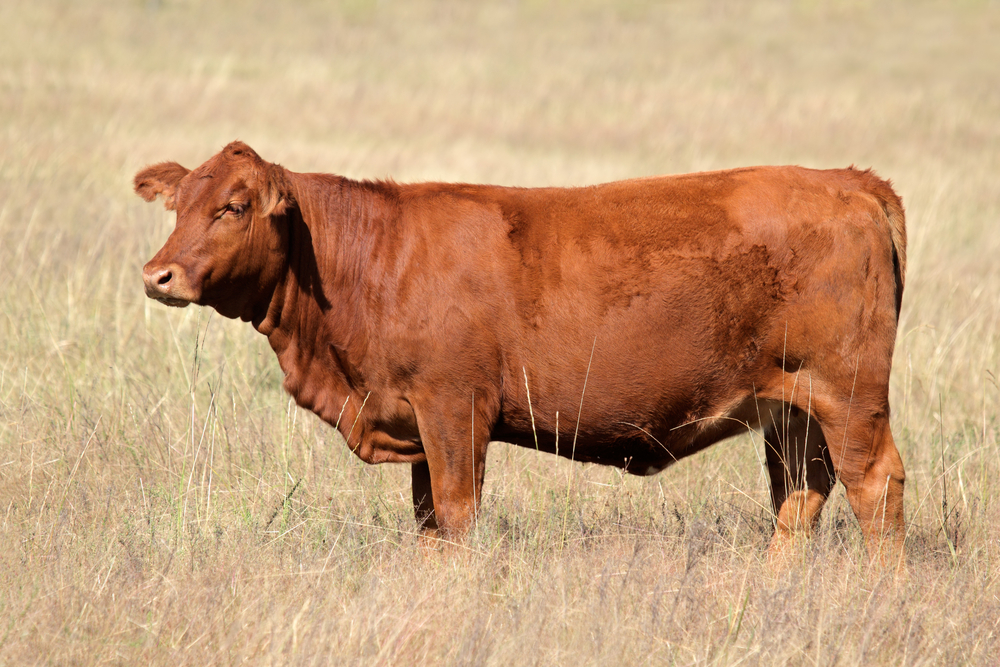
On a recent episode of The Endtime Show, Dave Robbins sat down with Byron Stinson, the man who helped locate five red heifers in Texas and arrange their transport to Israel. The heifers were flown into Tel Aviv and taken to Shiloh—an area of biblical significance where the Tabernacle stood for a season in Israel’s early history.
For students of Scripture and end-time prophecy, the red heifer is not a side topic. It’s one of the most talked-about pieces of the puzzle connected to ritual purification, Temple worship, and the accelerating push toward events many believe the Bible foretold.
Does a Red Heifer Have to Be Born in Israel?
One of the first questions Dave raised was simple—and important: Does the red heifer have to be born in Israel to meet biblical requirements?
Stinson’s answer was direct: there is no scriptural requirement that a qualifying red heifer must be born in Israel. He acknowledged that some traditions may insist otherwise, but emphasized that what matters is what Scripture actually says—not assumptions added later.
That distinction—Bible first, tradition second—frames much of the discussion around the modern red heifer story.
October 7, the “Seven-Front” War, and the Claim of a Catalyst
The conversation also turned to the October 7, 2023 Hamas invasion and the wider conflict that followed. Stinson claimed that in a letter attributed to Hamas leader Yahya Sinwar, the presence of the red heifers in Israel helped trigger a preemptive attack—an attempt, he said, to derail what militants believed could lead to Third Temple momentum.
Whether you agree with that interpretation or not, the takeaway is clear: the red heifer issue is not merely theological. It is now part of a volatile regional narrative—one that intersects religion, politics, and security concerns in real time.
Stinson also pointed viewers to Zechariah 12, arguing that the chapter describes nations surrounding Israel, Judah prevailing, and even enemies being struck in ways that echo modern events. Endtime has consistently urged viewers to measure headlines through the lens of Scripture—carefully, prayerfully, and without sensationalism—while recognizing that prophecy often becomes clearer as events unfold.
Why Passover 2024 Didn’t Happen
A major question for many watchers has been why a red heifer ceremony did not take place during Passover 2024.
Stinson said the decision ultimately rested with the rabbis he works alongside—men he described as weighing spiritual, political, and practical realities inside Israel. With war raging after October 7, he said the timing did not seem right. Dave noted that attempting such a ceremony during that season—especially with tensions surrounding the Temple Mount—could have ignited even wider regional unrest.
July 1, 2025: From “Practice” to “Real Ceremony”
Then came the moment many have been debating.
According to Stinson, on July 1, 2025, a ceremony was carried out in Shiloh after a plan for a “practice run” abruptly changed. He said Boneh Israel, led by Rabbi Yitzhak Mamo, owned the heifers and made the final call.
Here’s how Stinson described it:
-
Five heifers had been brought to Shiloh; two were disqualified.
-
Three remained that were considered fully kosher—unblemished, never worked, and completely red.
-
A practice was planned using a less-than-perfect animal.
-
But when the selected heifer would not load, the “most perfect” heifer stepped into place instead.
-
At that moment, Stinson said Rabbi Mamo decided the situation was providential—“God chose it”—and moved forward.
Stinson said the presence of a Kohen priest—a priest from the proper lineage—was essential. He argued that this priest alone could certify the heifer’s purity at the moment of the ceremony and confirm it was carried out correctly.
Notably, Stinson also addressed a frequent point of controversy: location.
Did It Have to Happen on the Mount of Olives?
Some critics have insisted a valid ceremony must occur on the Mount of Olives. Stinson said he once assumed the same—but argued that Scripture does not explicitly require that location.
Instead, he described what he called a “conundrum”: the law of the red heifer involves sprinkling toward the Tabernacle/Temple—yet there is no Temple standing today. He suggested this tension is part of why there is so much disagreement even among experts.
He then offered a viewpoint directed more toward Christians: while many Jewish interpreters focus exclusively on a physical Temple, believers in Jesus recognize that God also builds a spiritual temple within His people. In that framework, he said, the Shiloh ceremony involved both a physical act and a spiritual reality—while still pointing toward Jerusalem, where many believe a future Temple will eventually stand.
The Ashes—and the Controversy That Followed
Stinson said the heifer, the materials, and the biblical elements were burned together and the ashes collected. He also addressed a claim circulating online that Gentiles improperly gathered ashes.
According to Stinson, the Temple Institute/Temple Mountain Institute collected the first portion, and afterward he was permitted to collect what remained.
He added another striking assertion: that a small amount of ash—mixed into a large volume of water—could be sufficient for purification on a massive scale, even describing a small bag as enough, in principle, to purify millions.
Then came the media fallout.
Stinson said an agreement had been made for Boneh Israel’s team to be the only group filming professionally so a clear educational video could be produced. But someone, he claimed, recorded cell phone footage and released it to secular media. Within days, he said, reports circulated describing the ceremony as non-kosher and spreading misinformation about the heifer involved. He admitted he didn’t respond perfectly in the moment, and said he later apologized for how he reacted.
Where This Leaves Us
The conversation ended where many prophecy watchers find themselves today: watching, weighing, and waiting.
Stinson connected the larger moment to Daniel’s description of the clash between the kingdoms of man and the Kingdom of God. Dave closed by telling viewers they had heard his guest’s account of what happened July 1—and that the implications are significant.
At Endtime, we always come back to the same foundation:
-
The Bible is true.
-
Prophecy will be fulfilled exactly as God said.
-
And the closer we get to the return of Jesus Christ, the more the world will see spiritual issues become global flashpoints.
If the July 1 red heifer ceremony was carried out as described—and if its ashes are indeed being preserved for future use—then this story is not fading. It is accelerating.
And that’s why we’re paying attention.
Want to go deeper?
Watch The Endtime Show for continuing coverage and biblical analysis of Israel, the Temple Mount, and end-time prophecy—and visit endtime.com/events to see where Dave Robbins will be speaking at an upcoming prophecy conference.