

King Charles’ Multi-Faith Language Raises Questions About Britain’s Christian Identity
Britain’s Christian Heritage Under Pressure as King Charles Embraces Multi-Faith Language
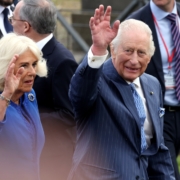 King Charles III’s revised royal role description has renewed questions about Britain’s Christian heritage, religious pluralism and what Christians should watch through the lens of Bible prophecy.
Christians watching world events understand that changes in language often reveal deeper changes in worldview. That is why a new description of King Charles III’s public role is drawing attention among believers concerned about religious freedom, national identity and the spiritual direction of the West.
According to the Royal Household’s 2025-26 Sovereign Grant report, the king is described as “Supreme Governor of the Church of England” while also serving in a role that “protects the space for Faith within the multi-faith nation.” The report also says the king uses his position to bring communities and faiths together across the United Kingdom.
That wording does not erase the monarchy’s formal connection to the Church of England. The Royal Family’s own website still states that the sovereign holds the title “Defender of the Faith and Supreme Governor of the Church of England.”
But for many Christians, the shift is still worth noting. It reflects a broader reality: Britain, once widely understood as a Christian nation in culture and public identity, is increasingly presenting itself as religiously plural, secular and post-Christian.
Britain’s changing religious landscape
The debate surrounding King Charles’ wording cannot be separated from Britain’s changing religious demographics.
The 2021 census for England and Wales found that, for the first time, fewer than half of residents identified as Christian. Christianity remained the largest religious category at 46.2%, or 27.5 million people, while “No religion” rose to 37.2%, or 22.2 million people.
The Muslim population has also grown. The Muslim Council of Britain’s 2025 census summary describes the U.K. Muslim population as roughly 4 million, while noting continued growth, civic engagement and internal diversity among British Muslims.
Those numbers do not mean Britain is becoming an Islamic republic, nor should Christians make careless claims about individual Muslims. Scripture commands believers to speak truthfully, love their neighbors and avoid bearing false witness.
However, the data does show a major cultural shift. Britain’s public institutions are increasingly operating in a multi-faith framework rather than a distinctly Christian one. That development should concern Christians who understand that nations do not remain spiritually neutral. When a society moves away from biblical truth, something else will fill the vacuum.
What changed — and what did not
It is important to be precise.
King Charles has not formally renounced his role as Supreme Governor of the Church of England. The monarchy has not announced the end of the established church. The king’s coronation oath and constitutional role remain tied to Britain’s historic Christian institutions.
What has changed is the public framing.
The new language places greater emphasis on the king as a protector of “Faith” in a “multi-faith nation.” That reflects King Charles’ long-standing interest in interfaith engagement and his desire to be seen as a monarch for all religious communities in the U.K.
Supporters will argue this is simply a practical acknowledgment of modern Britain. Critics will see it as another sign that Britain’s Christian identity is being diluted by secularism, globalism and religious pluralism.
Christians should be careful not to confuse prudence with panic. The biblical response is not fear, but discernment.
Biblical context: Nations, faith and the end times
The Bible teaches that the spiritual condition of nations matters.
Proverbs 14:34 says, “Righteousness exalteth a nation: but sin is a reproach to any people.” When a nation drifts from biblical truth, the effects eventually show up in law, education, family, morality and public life.
In the New Testament, Jesus warned of deception in the last days. In Matthew 24, He said many would be deceived and that lawlessness would increase before His return. Revelation 13 describes an end-time system involving political power, religious influence and economic control. Daniel also reveals the rise and fall of kingdoms under God’s sovereign hand.
That does not mean every policy change or royal phrase is a direct fulfillment of prophecy. We should not declare more than Scripture allows.
But the broader trend is significant. Across the Western world, Christian foundations are being replaced by secular governance, global institutions, moral relativism and spiritual compromise. For prophecy-aware believers, that trend deserves careful attention.
Religious freedom or religious compromise?
There is a difference between protecting religious freedom and surrendering biblical conviction.
Christians should support the freedom to preach the gospel, worship openly and live according to conscience. A government that protects genuine religious liberty is far better than one that persecutes dissenting faith communities.
At the same time, believers must recognize that “multi-faith” language can sometimes become a polite way of saying no faith has public authority — especially not Christianity. When all religions are treated as equally true in the public square, the exclusive claims of Jesus Christ become increasingly offensive to the culture.
Jesus did not present Himself as one spiritual option among many. He said, “I am the way, the truth, and the life: no man cometh unto the Father, but by me” (John 14:6).
That claim is not compatible with a worldview that reduces Christianity to one heritage tradition among many. It is either true or it is not. The church must have the courage to say so with both conviction and compassion.
For more information, watch The Endtime Show on Only Source Network.
What believers should watch
Christians should watch several developments closely.
First, watch how Britain’s constitutional connection to the Church of England is discussed in the years ahead. If public leaders increasingly treat that connection as merely ceremonial, it may signal further institutional retreat from the nation’s Christian heritage.
Second, watch religious freedom. The question is not only whether minority faiths are protected, but whether Christians are free to preach biblical truth on sin, salvation, marriage, gender and the exclusive lordship of Jesus Christ.
Third, watch the growth of globalist and interfaith language. Revelation warns of a coming world system that will demand allegiance. While today’s interfaith language is not automatically that system, it is part of a broader world trend toward religious unity without biblical truth.
Finally, watch the church. The most urgent issue is not whether a monarch uses stronger Christian language. The greater question is whether Christians themselves will remain faithful.
Follow Endtime Ministries for continual updates.
A call to discernment, not fear
King Charles’ revised role description is not the end of the British monarchy. It is not, by itself, the fulfillment of Revelation 13. But it is another reminder that the West is changing, and the Christian foundations many once took for granted are no longer secure.
Believers should respond with prayer, discernment and renewed commitment to the gospel.
The answer is not anger toward Muslims, secularists or political leaders. The answer is a faithful church, a clear witness and confidence that God remains sovereign over kings and kingdoms.
Daniel 2:21 reminds us that God “removeth kings, and setteth up kings.” No monarchy, parliament or global institution is beyond His authority.
The times may be uncertain, but the Word of God is not. Christians should watch carefully, speak truthfully and stand firmly — knowing that Jesus Christ is still King of kings and Lord of lords.