
Israel Expels Spain as Global Pressure Mounts: A Sign of the Times?
Israel Expels Spain From Gaza Coordination Center as Diplomatic Tensions Deepen
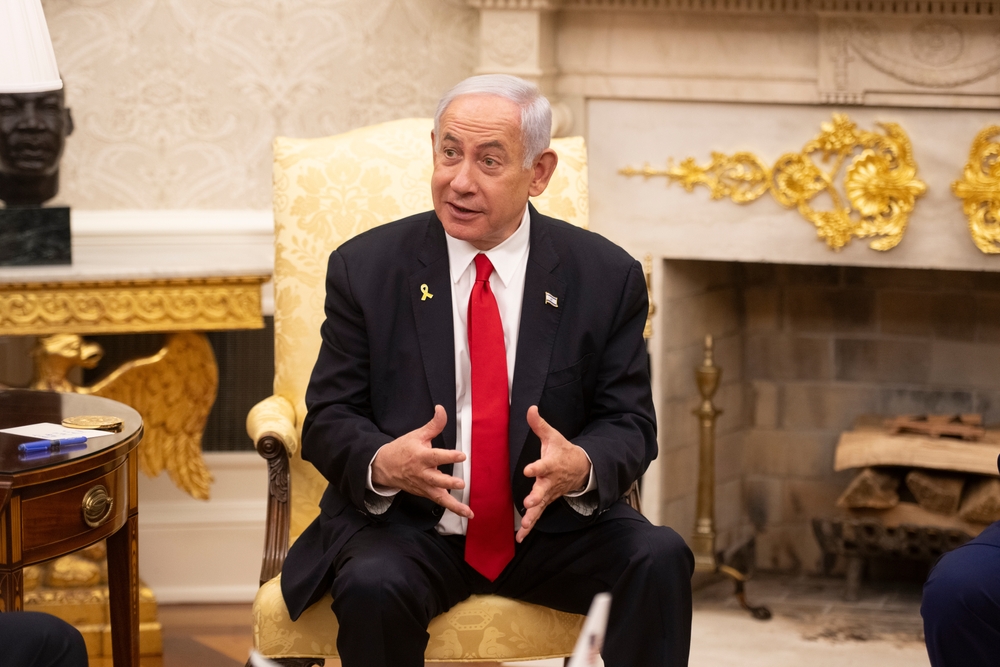
 For Christians watching the Middle East closely, this latest diplomatic rupture matters because it reflects something larger than a policy dispute. It is another sign of the increasing international strain surrounding Israel, the war in the region and the fragile political structures now being built around Gaza, aid delivery and broader peace efforts. Israel confirmed Friday that it had expelled Spain from the U.S.-backed Civil-Military Coordination Center, or CMCC, in Kiryat Gat, a move carried out in coordination with Washington, according to The Jerusalem Post’s report on the decision.
The Dispute Signals More Than a Bilateral Argument
Spain’s removal reflects a wider diplomatic divide
Israeli leaders framed the decision as a response to what they described as a sustained anti-Israel posture from Spanish Prime Minister Pedro Sánchez’s government. Prime Minister Benjamin Netanyahu said Spain had repeatedly stood against Israel, while Foreign Minister Gideon Sa’ar said Madrid’s “obsessive anti-Israel bias” had made it incapable of serving a constructive role in the peace framework tied to Gaza operations. Those details were reported Friday by The Jerusalem Post.
The center itself is not a minor outpost. According to President Isaac Herzog’s official visit summary from the Israeli President’s office, the CMCC in Kiryat Gat has been operating as a hub where Israeli and U.S. officials coordinate humanitarian, logistical and security mechanisms connected to Gaza. Herzog was briefed there in February by senior Israeli and U.S. commanders, underscoring the center’s operational importance.
That matters because Spain was not expelled from a symbolic forum. It was removed from an active coordination mechanism tied to one of the most sensitive conflict zones in the world. As a result, this story is not merely about diplomatic rhetoric. It is about who will and will not be allowed a seat at the table as regional actors try to shape Gaza’s future.
Spain’s Criticism of Israel Has Intensified
The backdrop includes Lebanon, Iran and EU pressure
Spain has become one of the most outspoken European critics of Israel’s current military posture. In recent days, international reporting has noted that Spain joined the chorus of governments condemning Israeli strikes in Lebanon, even as the region struggled to hold together a fragile ceasefire involving Iran, Israel and the United States. The Associated Press reported that several countries, including Spain, condemned the strikes and urged that Lebanon be included in ceasefire efforts. See The Associated Press coverage of the wider regional escalation.
That broader context helps explain why Israel now sees Spain as more than a difficult European partner. From Jerusalem’s perspective, Madrid has moved from criticism into active opposition against Israel’s war policy and regional strategy. Whether one agrees with that assessment or not, the diplomatic break is real, and it arrives at a time when alliances across the Middle East and Europe remain unstable.
Why Christians Should Pay Attention
Israel’s growing isolation remains a serious trend to watch
Believers should be cautious about forcing every headline into a prophetic timeline. Still, Scripture does teach that Jerusalem and the surrounding region will remain central in the last days, and that the nations will be deeply entangled in controversy over Israel. Zechariah 12:2-3 describes Jerusalem as a burdensome stone to the peoples and nations around it. Jesus also warned in Matthew 24 that believers would hear of wars and rumors of wars, yet should not surrender to fear.
This latest dispute does not prove a specific prophetic fulfillment. But it does fit a pattern Christians should watch soberly: growing international pressure on Israel, increasing multinational involvement in Middle East conflict management and mounting instability surrounding peace efforts. Those realities make biblical discernment more important, not less.
The CMCC Also Points to a Larger End-Times Conversation
International mechanisms are expanding in times of crisis
The existence of the CMCC itself is worth noting. As war, displacement and humanitarian breakdown spread, governments increasingly turn to multinational frameworks, joint command structures and regional enforcement mechanisms. In practical terms, those efforts may be necessary. But from a Bible prophecy perspective, they also remind believers that global crises often accelerate the creation of broader systems of international coordination.
That does not mean every international body is prophetically decisive. It does mean Christians should stay alert to the way repeated crises can normalize larger transnational systems, especially in the Middle East.
What We Know and What We Do Not
The facts are clear, but the long-term impact is still unfolding
What we know is straightforward. Israel removed Spain from the CMCC. Israeli officials say the move was coordinated with the United States. Spain has taken an increasingly adversarial tone toward Israel’s military campaigns, and the diplomatic fallout has now reached a concrete operational level.
What we do not yet know is whether this step signals a broader reshuffling of international participation in Gaza-related coordination or whether other European governments could face similar exclusion if tensions continue to rise. We also do not know whether this rupture will remain limited to the CMCC or spill over into wider diplomatic and security cooperation.
A Time for Discernment, Prayer and Confidence in God
Christians do not need to panic when geopolitical tensions escalate. But neither should we ignore the significance of the hour. Events like this remind us that Israel remains at the center of international controversy and that the nations continue to struggle over peace, war, borders and legitimacy in the land.
This is a time for believers to pray for the peace of Jerusalem, to reject media-driven confusion and to stay anchored in the Word of God. For more ongoing coverage and biblical analysis of Israel, the Middle East and the end times, direct readers to Endtime’s news and prophecy coverage and to Watch Endtime programming on Only Source.