

“Deal or Obliteration”: What Trump’s Iran Warning Means for the Last Days
Trump Warns Iran: “Deal or Obliteration” Raises Stakes in Middle East
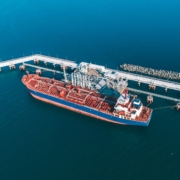
President Donald Trump’s latest warning to Iran is more than another strong political statement. It reflects a rapidly escalating Middle East crisis with major implications for global stability, energy markets and the kind of regional volatility Bible prophecy students have watched for years.
For Christians, this story matters because the Middle East remains central both to Scripture and to current world affairs. While believers should avoid sensationalism, they should not ignore the significance of rising tensions surrounding Iran, Israel and the strategic gateways that affect the nations.
A Stark Warning From Washington
President Trump said Monday that the United States is in serious discussions with what he called a “new and more reasonable” Iranian regime. At the same time, he made clear that if a deal is not reached soon — and if the Strait of Hormuz is not reopened to commerce — the U.S. could strike Iran’s electric plants, oil wells and Kharg Island.
That warning immediately raised the stakes. According to The Associated Press, Trump’s remarks came as the wider conflict involving Iran, Israel and the United States continued to destabilize the region, with ongoing retaliation and diplomatic pressure building at the same time.
This is what makes the moment so serious. The administration is speaking the language of negotiation, but it is also making clear that military force remains a very real option.
Why the Strait of Hormuz Matters
The Strait of Hormuz is not just a regional issue. It is one of the most important energy chokepoints in the world, and any sustained disruption there has immediate global consequences.
As The Guardian reported, oil prices surged sharply after Trump’s threat against Iran’s energy infrastructure, underscoring how fragile the global economy becomes when conflict intensifies in the Persian Gulf. The report noted that fears over the waterway and the broader war pushed Brent crude significantly higher, showing that markets are already reacting to the possibility of a deeper confrontation.
That matters because the Strait of Hormuz is tied directly to the flow of oil and gas to the nations. When that route is threatened, the fallout can move quickly from the battlefield to the gas pump, the supply chain and the broader world economy.
Economic Pressure and Strategic Leverage
Trump’s message appears designed to increase pressure on Tehran by targeting the very infrastructure that gives Iran economic leverage. In effect, the White House is signaling that if diplomacy does not succeed, America may attempt to remove Iran’s ability to continue using energy and maritime pressure as a weapon.
That strategy carries risk. It may strengthen deterrence, but it also increases the possibility of wider retaliation across the region.
Questions About Iran’s Leadership
One of the most intriguing parts of Trump’s statement was his reference to a “new and more reasonable” regime. That wording has prompted fresh questions about what is happening inside Iran and whether there has been any meaningful shift within the country’s ruling structure.
According to The Washington Post, the Trump administration had already indicated in recent days that it was delaying immediate strikes on Iranian energy infrastructure while negotiations continued through intermediaries. That report suggests there has been at least some active diplomatic backchanneling, even as military pressure remains intense.
Still, much remains unclear. At this point, there is not enough verified information to say whether Iran is experiencing a genuine regime transition, a temporary internal reshuffling or simply a rhetorical reframing during negotiations. Christians should be careful not to claim more certainty than the facts allow.
A Biblical Worldview Without Speculation
For believers who follow Bible prophecy, Iran’s role in the Middle East naturally draws attention. Persia is named in Scripture, and passages such as Daniel 10 and Ezekiel 38 remind us that the region will remain prophetically significant.
Even so, wisdom requires restraint. This is not the time to declare a definitive prophetic fulfillment based on incomplete information. It is, however, another reminder that the conditions Jesus described — “wars and rumors of wars” — continue to shape the world in visible ways.
For readers who want to explore these issues more deeply, Endtime’s prophecy resources offer biblical teaching on world events and the Scriptures that speak to the end times. For a more focused study, Understanding the End Time provides a helpful starting point for connecting current events with the Bible’s prophetic framework.
There is also value in following ongoing video analysis as events develop. Readers can watch current-event coverage and prophecy teaching on Only Source.
What We Know and What We Do Not
What we know is that Trump has issued a direct warning, the Strait of Hormuz remains central to the crisis and outside reporting confirms that both markets and military calculations are being shaped by the possibility of further escalation.
What we do not know is whether a deal is close, what Trump means by a “new” regime, or how Iran and its regional allies would respond if negotiations fail. Those unanswered questions are precisely why believers should watch carefully and speak carefully.
A Time for Discernment, Prayer and Confidence in God
In moments like this, Christians should resist two equal errors: panic and indifference. Panic forgets God’s sovereignty, while indifference ignores the signs of an increasingly unstable world.
The better response is discernment. Pray for peace, pray for leaders, pray for Israel and pray that the church will remain spiritually awake. The headlines may change quickly, but the Word of God does not.
As tensions rise once again in the Middle East, believers should remember that the Lord is not surprised by the movement of nations. Our task is to stay grounded in truth, anchored in Scripture and ready to shine the light of the Gospel in a troubled world.