

Church Targeted in Lebanon Amid Hezbollah Claims: What It Means in Light of Bible Prophecy
Rising Tensions in Lebanon Highlight Fragile Coexistence and Regional Instability
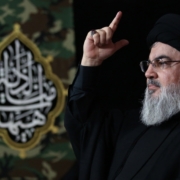
Escalating tensions in Lebanon are drawing renewed attention to the fragile balance between religious communities in the Middle East—an issue of deep importance for Christians watching global events through the lens of Bible prophecy. As conflict intensifies along Israel’s northern border, recent incidents involving Hezbollah and Christian communities reveal how quickly unrest can spread.
Scripture reminds us that “wars and rumors of wars” will characterize the last days (Matthew 24:6-7). While we avoid premature conclusions, developments like these deserve careful attention and prayerful discernment.
Hezbollah Accusations Lead to Attack on Christian Village
False Claims Spark Violence
According to regional reporting, Hezbollah circulated claims that Israeli Defense Forces (IDF) soldiers were hiding inside a church in the Christian village of Dibil. However, local officials and independent sources later confirmed that no Israeli soldiers were present.
This account aligns with reporting from The Jerusalem Post’s coverage of the Lebanon church incident
Despite the lack of evidence, the accusation reportedly became the justification for shelling and rocket fire targeting the Christian institute. At least one civilian was injured, and panic spread throughout the village.
Officials even offered tours of the church to journalists to disprove the claim, highlighting how quickly misinformation can escalate into violence.
Propaganda and Perception
This incident underscores the growing role of narrative warfare in modern conflict. Competing claims—often amplified through media and social platforms—can inflame tensions before facts are verified.
For believers, this echoes Christ’s warning about deception in the last days (Matthew 24:4). Discernment is essential.
Sectarian Strain: Displacement Deepens Divisions
A Nation Under Pressure
The humanitarian crisis in Lebanon continues to worsen. More than one million people have been displaced by ongoing fighting between Israel and Hezbollah, placing enormous strain on communities across the country.
This growing displacement crisis is detailed in TIME’s report on mass displacement in Lebanon.
In response, some Christian and Druze communities have reportedly restricted access to displaced Shi’ite Muslims, fearing Hezbollah operatives could be embedded among civilians and draw attacks.
This reflects a difficult reality: security concerns are colliding with humanitarian needs, deepening mistrust between religious groups.
Growing Internal Fractures
Lebanon’s internal divisions are becoming more visible as the conflict escalates. Reports indicate rising anger toward both Hezbollah and Israel among civilians, alongside increasing sectarian tension.
This broader societal strain is also reflected in ABC News Australia’s analysis of rising anger inside Lebanon.
At the same time, protests, demonstrations, and localized clashes in Beirut point to a nation under pressure from both internal and external forces.
Broader Conflict Expands Across the Region
Israel-Hezbollah War Intensifies
The current conflict cannot be viewed in isolation. Israel has expanded military operations in southern Lebanon, targeting Hezbollah infrastructure and considering additional security measures along its northern border, according to Associated Press reporting on Israel’s expanding military operations in Lebanon.
The war has already resulted in significant casualties and destruction, with fears growing that the conflict could escalate further or draw in additional regional players, including Iran.
A Region on Edge
Lebanon now stands at the intersection of multiple pressures:
- Israel vs. Hezbollah
- Iranian influence in the region
- Internal sectarian divisions
This convergence increases the likelihood of further escalation—something global leaders are watching closely.
A Region Central to Bible Prophecy
Watching the Middle East Carefully
The Middle East remains central to biblical prophecy, particularly concerning Israel and surrounding nations. While Scripture does not identify every modern event, it clearly indicates increasing instability leading up to the return of Jesus Christ.
For deeper understanding, explore Endtime’s comprehensive teachings on Bible prophecy.
You can also follow ongoing prophetic analysis through Only Source.
What We Know—and What We Don’t
At this stage, it is clear that:
- Hezbollah spread claims later denied by officials
- A Christian site was attacked based on those claims
- Mass displacement is fueling sectarian tension
- Regional conflict involving Israel and Hezbollah is intensifying
What remains uncertain is how far this conflict will spread and whether it will trigger a broader regional war.
A Call for Discernment and Prayer
These developments are sobering reminders of how quickly instability can grow—especially in regions tied closely to biblical history and prophecy. Yet Scripture also gives clear instruction: do not be troubled, but remain watchful (Matthew 24:6).
As tensions rise, believers should:
- Pray for peace and protection for civilians
- Seek truth amid competing narratives
- Stay grounded in God’s Word rather than fear
In uncertain times, our confidence is not in governments or military outcomes, but in the sovereignty of God. He is not surprised by these events—and His prophetic plan is moving forward exactly as foretold.