

Caught in the Crossfire: Jordan Navigates Rising Iran Conflict and Regional Tension
/in Blog, Prophecy in the News /by John LittleJordan Navigates Regional Turmoil as Iran Conflict Spreads
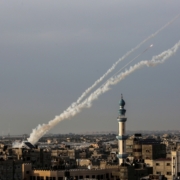
As tensions escalate across the Middle East, the Kingdom of Jordan finds itself in an increasingly fragile position—caught in the expanding conflict involving Iran, Israel, and the United States. For Christians watching world events through the lens of Bible prophecy, Jordan’s situation is significant. The nation sits at the crossroads of regional alliances, military escalation, and territories long associated with biblical history.
Though often overlooked in major headlines, Jordan’s experience reveals just how widespread—and volatile—the current crisis has become.
A Nation Under Pressure, Yet Maintaining Stability
Quiet Amid Chaos
While neighboring nations face instability, Jordan has maintained a measured and cautious posture. However, the kingdom has not been spared. Since the conflict began on Feb. 28, Iranian missile and drone attacks have repeatedly entered Jordanian airspace, with some striking inside the country and injuring civilians.
According to regional reporting from The Wall Street Journal’s coverage of the Iran conflict, Iranian drone and missile barrages have triggered alerts across multiple countries, including Jordan, underscoring the expanding reach of the war.
Jordan has strongly condemned these attacks while emphasizing that it is not a participant in the conflict. Even so, it continues to defend its airspace and protect its citizens.
Mounting Security Concerns
The scale of attacks reflects a growing threat environment. Jordanian officials report hundreds of missile and drone incidents, including debris falling in populated areas and causing injuries.
These developments align with broader regional trends. Analysis from The Long War Journal on Iranian missile and drone activity notes that Iran and its proxy networks have launched coordinated strikes across multiple Arab states, demonstrating both capability and intent to expand the conflict beyond a single front.
Jordan’s experience is not isolated—it is part of a wider pattern of escalation affecting the entire region.
A Widening Regional Conflict
Economic and Strategic Implications
Beyond direct military threats, the conflict is also impacting global stability. Disruptions to key energy routes and infrastructure are raising concerns about economic fallout worldwide.
Live updates and reporting from The Guardian’s Middle East conflict coverage highlight growing fears over energy security and shipping disruptions, particularly in critical waterways like the Strait of Hormuz.
Regional leaders—including those in Jordan, Saudi Arabia, and Qatar—have warned that continued Iranian attacks represent a “dangerous escalation” that threatens both security and economic stability.
A Region on Edge
The broader Middle East remains on high alert. Military activity continues across several fronts, and the risk of further escalation remains high.
Jordan, while seeking to avoid deeper involvement, is inevitably affected by these developments. Its geographic position and alliances make it both a strategic partner and a potential target.
Strategic Relationships in a Shifting Region
Balancing Allies and Neighbors
Jordan maintains a unique diplomatic position. It has peace with Israel, strong ties with Gulf nations, and working relationships with neighboring states.
Recent meetings between Jordan’s King Abdullah II and Gulf leaders reflect ongoing coordination regarding the crisis. Discussions have centered on energy security, freedom of navigation, and regional stability.
These efforts demonstrate Jordan’s role as a stabilizing force in an increasingly unstable environment.
The Syrian Factor
To the north, southern Syria presents ongoing challenges. The presence of militias, smuggling networks, and shifting territorial control creates uncertainty along Jordan’s border.
Iran-backed groups operating in nearby regions further complicate the situation, raising concerns about potential spillover violence. Jordan has previously taken action to secure its borders and prevent instability from spreading.
Why This Matters in Bible Prophecy
For students of Bible prophecy, Jordan’s position is especially noteworthy.
The territory of modern Jordan corresponds to the ancient lands of Edom, Moab, and Ammon—regions specifically mentioned in prophetic passages such as Daniel 11.
Daniel 11:41: Edom, Moab, and the chief of the children of Ammon shall escape out of his hand.\text{Daniel 11:41: Edom, Moab, and the chief of the children of Ammon shall escape out of his hand.}Daniel 11:41: Edom, Moab, and the chief of the children of Ammon shall escape out of his hand.
While interpretations vary, many prophecy teachers have long suggested that this region may play a distinct role in end-time events.
To explore this further, readers can study Understanding Daniel 11 and the End Times and access deeper teaching through Only Source Streaming Platform.
What We Know—and What to Watch
What We Know
- Jordan has been directly impacted by Iranian missile and drone activity
- Regional conflict is expanding beyond initial battle lines
- Middle Eastern leaders are actively coordinating responses
- Economic and energy concerns are increasing alongside military escalation
What We Don’t Know
- Whether Iran will escalate attacks further against Jordan
- How long Jordan can maintain its current neutral stance
- Whether instability in Syria and Iraq will spill into Jordan
What Believers Should Watch
Christians should pay close attention to:
- Shifting alliances in the Middle East
- Continued escalation involving Israel and surrounding nations
- Developments affecting historically significant territories
For continued updates and biblical perspective, visit Endtime Ministries News & Analysis.
A Call to Discernment and Prayer
Jordan’s situation is a sobering reminder that even nations seeking peace are not immune to the ripple effects of regional conflict. The increasing frequency of attacks and the widening scope of war point to a Middle East under significant strain.
Yet Scripture calls believers to remain watchful, not fearful.
As Jesus taught in Matthew 24, we are to discern the times while placing our trust in God’s sovereign plan. In uncertain days, believers can stand firm, knowing that world events are not random—but unfolding according to His divine purpose.
Now is the time for prayer—for peace in the Middle East, for wisdom among leaders, and for discernment among God’s people.