

A Shaken Union: Europe’s Economic Struggles and the Prophetic Implications
The Four Horsemen of Europe’s Decline
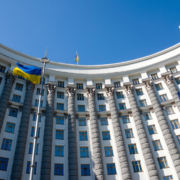
Europe still evokes images of grand cathedrals, cultural refinement and political stability. For generations, it has been viewed as a global center of influence and prosperity. Yet beneath that familiar exterior, the European Union is facing mounting economic, demographic and political pressures that are reshaping its future.
For Christians who follow world events through the lens of Bible prophecy, Europe’s trajectory matters. Scripture repeatedly points to a revived European-centered power structure in the last days. While today’s challenges do not automatically fulfill prophecy, they are developments worth watching with discernment.
A growing number of analysts argue that Europe is confronting four major forces—each contributing to a broader pattern of decline.
The First Horseman: Lingering Debt and Economic Fragility
Europe’s modern instability accelerated during the 2009 sovereign debt crisis. When Greece revealed that its deficit was far larger than previously reported, markets reacted sharply. The crisis soon spread to Spain, Ireland, Portugal and Italy, threatening the eurozone’s survival.
The European Commission later detailed how emergency mechanisms such as the European Financial Stability Facility were created to stabilize the euro area and prevent systemic collapse.
European Financial Stability Facility (EFSF) Overview
Although those measures prevented immediate disaster, Europe has struggled to regain strong economic momentum. According to data from Eurostat’s GDP growth statistics, economic expansion across the euro area has remained uneven and subdued compared to global competitors.
The eurozone today appears stable on the surface, but structural weaknesses remain. Debt levels are high, growth is modest and political unity is often strained.
Historically, crises in Europe have led to greater centralization of authority. That pattern is significant for students of prophecy who recognize that the final world system described in Daniel 2 and Revelation 13 emerges from a revived European framework.
The Second Horseman: Immigration and Social Strain
Europe’s demographic challenges intensified during the migration surge that followed the Arab Spring. Conflict and instability in the Middle East and North Africa led millions to seek refuge within EU borders.
The European Parliament’s migration and asylum statistics show that the EU has processed millions of asylum applications over the past decade, fundamentally reshaping population patterns across the continent.
While many European leaders framed migration as both a humanitarian obligation and an economic necessity, the long-term impact has proven complex. Social welfare systems already burdened by aging populations face increasing pressure. Housing shortages, integration challenges and political polarization have intensified across multiple member states.
Jesus warned that the age preceding His return would be marked by unrest and instability among nations (Matthew 24:6–7). Migration itself is not prophetic fulfillment, but large-scale demographic shifts often produce the kind of social tension Scripture describes.
Believers should watch not only the humanitarian dimension of this issue, but also how it influences political unity and calls for stronger centralized governance.
The Third Horseman: The Cost of the Green Deal
The European Union has positioned itself as a global leader in climate policy. The European Green Deal aims to make Europe climate-neutral by 2050, including a ban on new gasoline-powered cars by 2035 and aggressive emissions reductions.
The European Commission outlines these ambitions in its official policy framework for the European Green Deal.
While environmental stewardship is consistent with biblical principles of responsible dominion, critics argue that the EU has underestimated the economic cost of rapid transition. Manufacturing companies have warned of rising energy prices and regulatory burdens. Some firms have relocated production outside Europe, contributing to slower industrial growth.
The challenge is not whether environmental care matters—it does—but whether Europe’s pace and scale of transformation are economically sustainable.
As Europe struggles with stagnation, its global competitiveness continues to erode relative to emerging powers such as China and India.
The Fourth Horseman: Bureaucracy and Political Drift
Another persistent concern is the EU’s complex bureaucratic structure. Layers of regulation and centralized authority have drawn criticism from business leaders and political reformers alike.
The EU was originally envisioned as a cooperative economic community. Over time, however, it has evolved into a deeply integrated political entity with expansive regulatory authority.
Politically, the bloc continues to lean toward expansive social welfare, climate mandates and centralized policymaking. Even conservative parties often operate within that same policy framework. The result is limited ideological diversity and growing frustration among segments of the electorate.
From a prophetic standpoint, such consolidation of authority is worth watching. Scripture describes a final global system that combines political, economic and regulatory power on an unprecedented scale (Revelation 13:16–17).
Today’s European stagnation does not contradict prophecy. In fact, periods of weakness often precede calls for stronger, more unified leadership.
A Prophetic Perspective on Europe’s Future
It is important to clarify what we know and what we do not know.
We know that Europe is experiencing measurable economic stagnation, demographic strain and political centralization. We know that its global influence is shifting. We do not know precisely how or when these developments may align with end-time prophecy.
Bible prophecy does not portray Europe as permanently weak. Rather, it anticipates a revived system with significant global influence.
For deeper study on this prophetic framework, readers can explore The Rise of the Antichrist System.
What Christians Should Be Watching
Believers should watch for:
-
Further centralization of EU authority
-
Economic instability that prompts structural reform
-
Political movements calling for stronger continental leadership
-
Shifts in Europe’s relationship with Israel and the Middle East
For ongoing biblical analysis of global developments, visit Endtime Ministries.
To watch in-depth prophecy teaching and current events programming, visit OSN on demand.
Confidence in an Unshakable Kingdom
Europe’s challenges remind us that no human institution is permanent. Political unions rise and fall. Economies expand and contract. Social systems evolve and sometimes fracture.
Yet Hebrews 12:28 assures believers that we are receiving “a kingdom which cannot be shaken.”
As Europe navigates uncertainty, Christians are called not to fear, but to remain watchful, prayerful and grounded in Scripture. World events may shift rapidly, but God’s sovereign plan continues to unfold exactly as foretold.