
Massive US Strikes Hit Iran
By Bryan Smith
American forces have expanded their attacks across Iran as Tehran retaliates against regional countries, threatens critical infrastructure, and fights to retain leverage over the Strait of Hormuz. (Last Updated – July 16th, 2026)
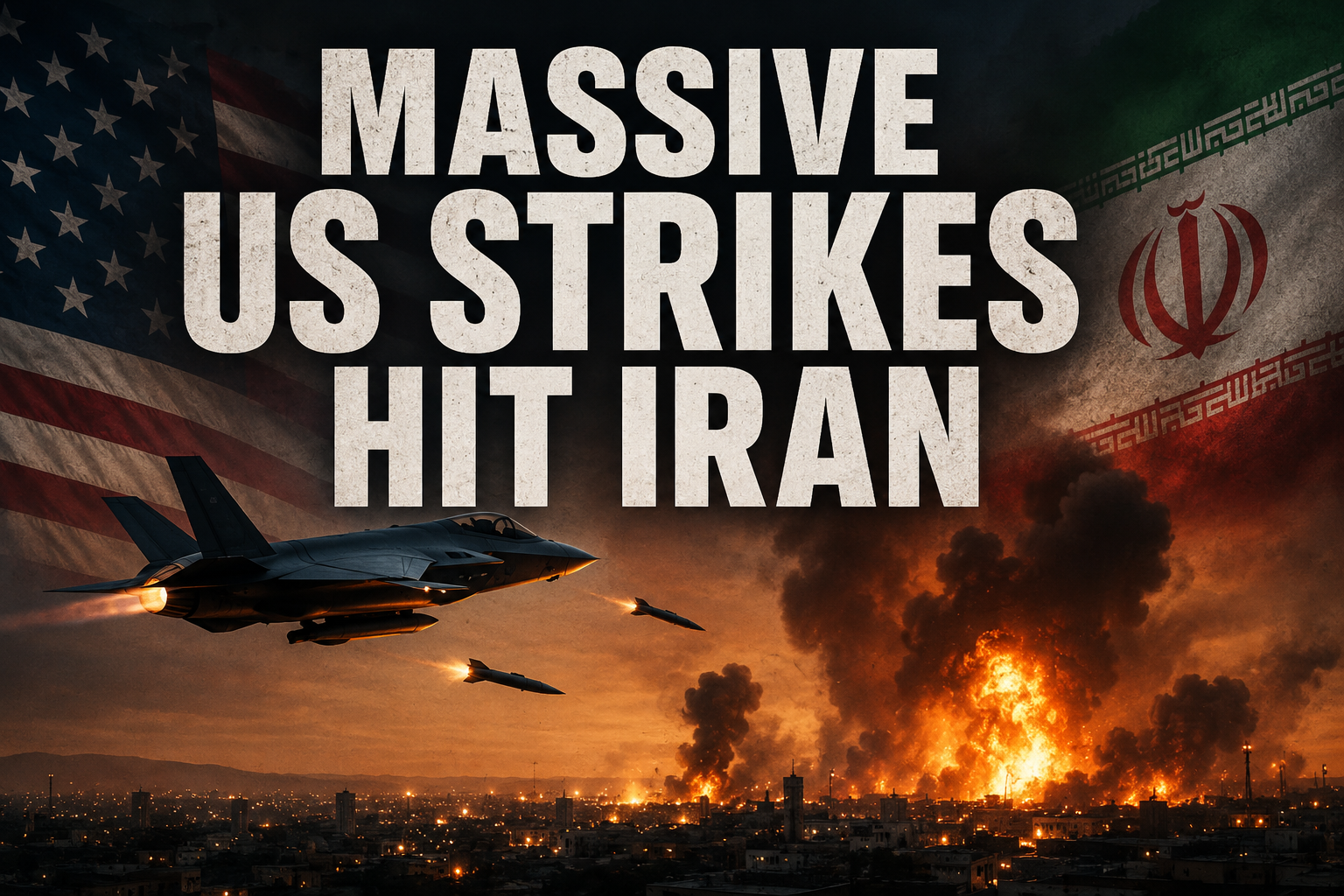
The United States has intensified its military campaign against Iran, launching successive waves of strikes against command centers, missile installations, air-defense systems, coastal surveillance facilities, naval assets, and drone capabilities across an expanding portion of the country.
What began as a campaign largely concentrated along Iran’s southern coastline with and the Strait of Hormuz (with 170 Iranian targets hit) has now widened geographically with dozens more. Iranian media reported strikes near Tehran and across several provinces on Thursday, July 16, demonstrating that the United States is willing to attack military infrastructure well beyond Iran’s coastal defense network.
The escalation followed renewed Iranian attacks against commercial shipping and nations hosting American military forces. Iran has launched missiles and drones toward Bahrain, Jordan, and Kuwait, while warning that regional infrastructure could face broader attacks if the United States begins striking Iranian power plants, bridges, or other civilian-linked facilities.
The renewed fighting has effectively shattered the interim ceasefire reached the previous month. Although diplomatic channels remain open, the momentum is again moving toward a larger regional confrontation.
What Happened?
U.S. Central Command announced several major waves of attacks during the week, each designed to weaken Iran’s ability to threaten vessels traveling through the Strait of Hormuz.
On July 12, American forces struck dozens of targets at multiple locations. The operation hit military air-defense systems, coastal radar sites, missile and drone capabilities, and small boats. U.S. forces employed fighter aircraft, naval vessels, aerial attack drones, and sea drones during the campaign.
Additional strikes followed as the United States resumed a naval blockade against vessels traveling to and from Iranian ports and coastal areas.
During a seven-hour operation on July 14, American aircraft, drones, and naval vessels attacked Iranian missile and drone installations, naval capabilities, and coastal defense systems near the Strait of Hormuz. More than 20 U.S. Navy warships and hundreds of American military aircraft were operating across the Middle East as the blockade resumed, according to U.S. Central Command.
The campaign continued the following day.
U.S. Central Command said:
An evening wave of strikes on July 15 targeted Iranian command centers, air-defense sites, missile and drone capabilities, and coastal surveillance facilities in several locations, including Bandar Abbas.
Earlier that day, American forces attacked coastal defense and cruise missile sites on Greater Tunb Island during a 90-minute operation.
Greater Tunb Island sits near the meeting point of the Persian Gulf and the Strait of Hormuz. Iran has heavily militarized the island because of its strategic location overlooking one of the world’s most consequential maritime corridors.
By July 16, the scope of the attacks had widened again.
Iranian state media reported strikes around Tehran and in the provinces of Semnan, Hamedan, Hormozgan, Khuzestan, Lorestan, Markazi, and Sistan and Baluchestan. Semnan is associated with Iran’s ballistic missile production and space program. Other attacks were reported on Qeshm Island near the Strait of Hormuz.
The United States also disabled a Curacao-flagged tanker that American officials said was attempting to break the naval blockade and sail toward Iran’s principal oil export terminal. According to the U.S. account, the vessel ignored repeated warnings before American forces fired upon it.
The evolving campaign is no longer best understood by counting individual targets. The more significant development is the sustained tempo, geographic expansion, and increasingly diverse character of the operation.
American forces are now attacking coastal defenses, military command structures, missile production capabilities, naval assets, radar systems, drone sites, and infrastructure that supports Iran’s ability to control or disrupt maritime traffic.
Iran Retaliates Across the Region
Iran has responded by widening its own target list.
Authorities in Bahrain, Jordan, and Kuwait reported Iranian missile or drone attacks during the renewed hostilities. These nations host American personnel, facilities, or strategic military assets. Bahrain is also home to the headquarters of the U.S. Navy’s Fifth Fleet.
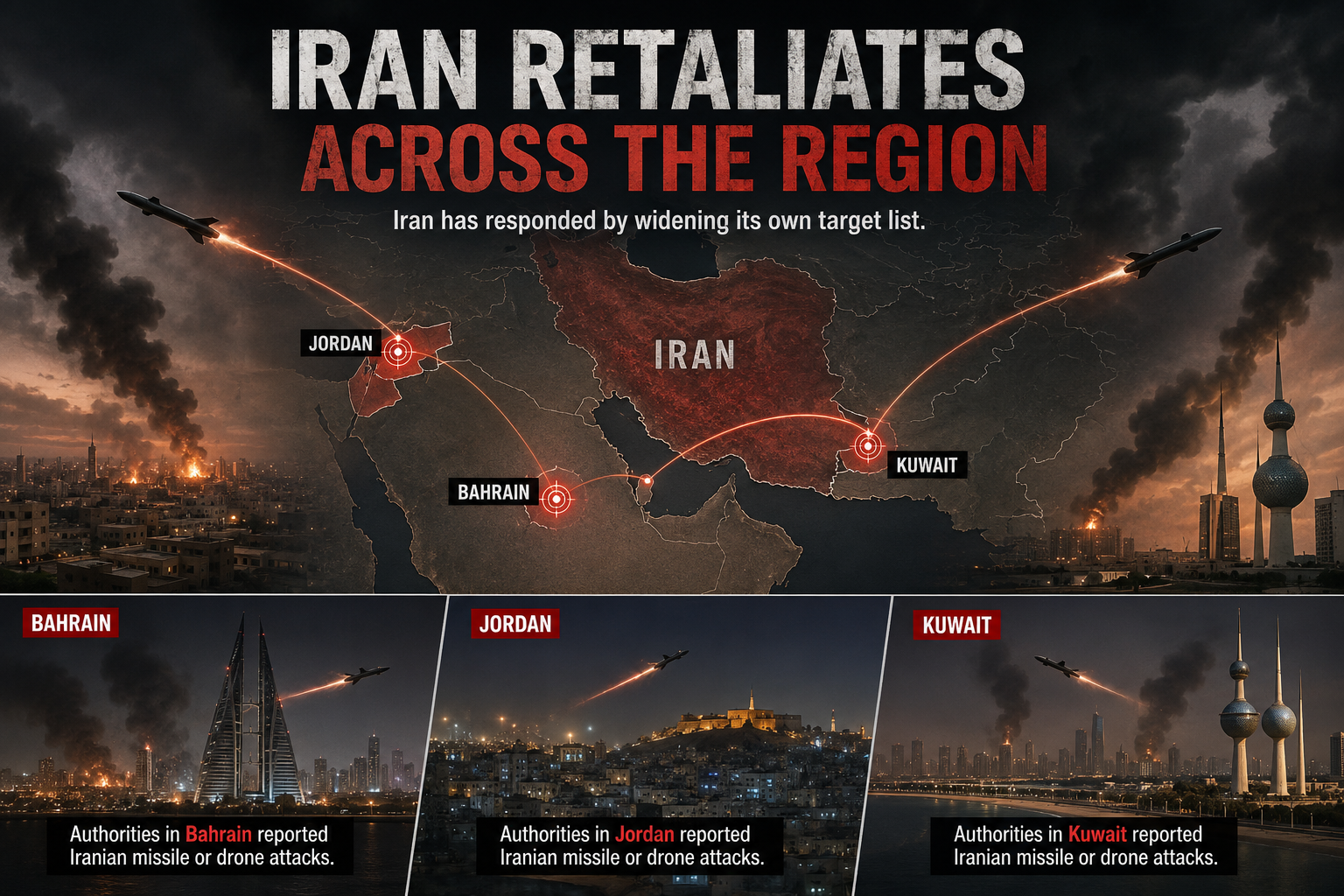
Iranian officials have warned that attacks could expand further if the United States strikes power plants, bridges, or other major infrastructure inside Iran.
A spokesperson for Iran’s Khatam al-Anbiya Central Headquarters said Tehran could attack infrastructure throughout the region in response to a broader American campaign. Iranian officials have also described the Strait of Hormuz as an inviolable red line and rejected Washington’s right to determine who may travel through it.
Iran’s Islamic Revolutionary Guard Corps has reportedly warned that oil and gas exports from the region could be halted as long as American military operations continue.
These threats carry substantial weight because several of the world’s largest petroleum exporters depend upon Gulf shipping routes. Any significant interruption could affect oil prices, transportation expenses, fertilizer costs, manufacturing, and food prices far beyond the Middle East.
Iran’s actions have already affected civilian maritime traffic.
Two United Arab Emirates tankers, the Mombasa and Al Bahiyah, were reportedly struck by Iranian cruise missiles while traveling through the Strait of Hormuz. One Indian crew member was killed, and several others were injured. India subsequently summoned an Iranian diplomat and formally protested the attacks.
Week-to-week cargo shipments through the strait had fallen by nearly one-quarter before the latest surge in attacks, according to maritime data cited by The Associated Press.
Why This Matters
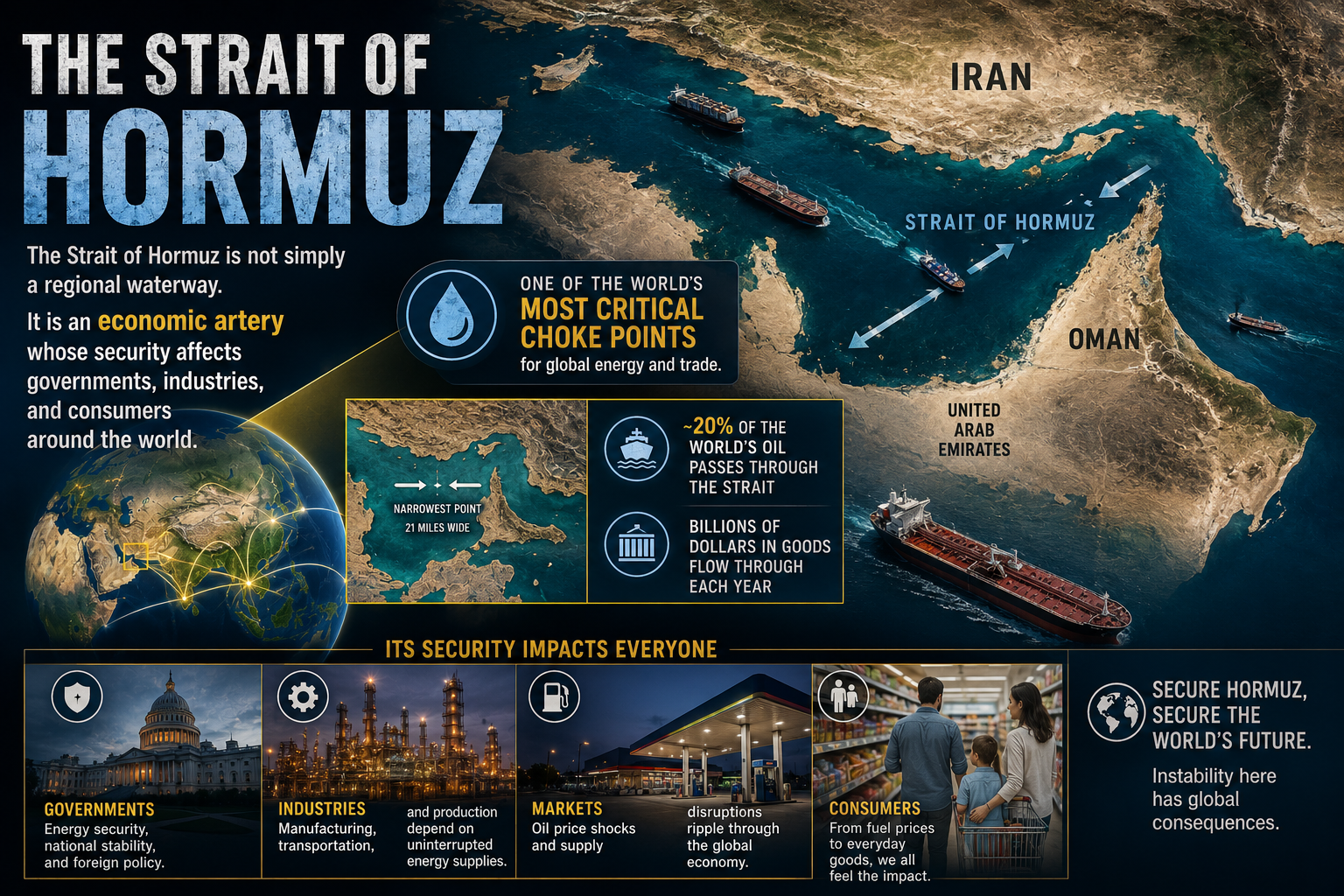
The Strait of Hormuz is not simply a regional waterway. It is an economic artery whose security affects governments, industries, and consumers around the world.
Iran has historically viewed its geography as one of its greatest strategic advantages. Although the United States possesses superior conventional military power, Tehran can impose global costs by threatening commercial vessels, energy exports, and American partners throughout the Gulf.
This creates an asymmetric conflict.
The United States can destroy Iranian missile batteries, radar systems, command centers, and naval vessels. Iran, however, does not need to defeat the American military in a conventional war to exert pressure. It only needs to create enough insecurity to increase shipping costs, disrupt energy markets, pressure Gulf governments, and force the international community to demand a negotiated settlement.
That dynamic makes the conflict especially difficult to contain.
Every American strike weakens an Iranian military capability, but it also presents Tehran with a decision. Iran can absorb the attack, seek a diplomatic exit, retaliate proportionally, or broaden the war by striking American bases, regional infrastructure, commercial shipping, or allied nations.
The possibility of miscalculation grows with every exchange.
A missile intended for a military installation could cause civilian casualties. An attack on a commercial vessel could kill foreign nationals. A strike on an American base could produce demands for a significantly larger response. An assault on Gulf oil infrastructure could quickly transform a regional conflict into an international economic emergency.
There is also a diplomatic paradox at work.
The intensity of the war may make a peace agreement more necessary, but it can simultaneously make compromise politically dangerous for both sides. Leaders who have invested heavily in military action may resist any settlement that appears to reward their adversary.
President Donald J. Trump has said a peace agreement remains possible, but the widening range of attacks suggests that diplomacy has not yet regained control of the conflict.
Prophetic Perspective
The escalating U.S.-Iran conflict is not, by itself, the fulfillment of a specific Bible prophecy, but could easily develop into such.
Scripture does not state that the United States will conduct a particular number of strikes against Iran. Nor does the Bible provide a modern military timeline identifying every war, air campaign, blockade, or diplomatic crisis that will occur before the Second Coming.
Bible prophecy students should resist the temptation to label every Middle Eastern confrontation as the immediate fulfillment of Revelation, Daniel, or Ezekiel.
Nevertheless, this war deserves careful attention because it involves nations, geographic regions, military alliances, and diplomatic pressures that are significant within the prophetic framework of Scripture.
Iran and the Battle of Armageddon
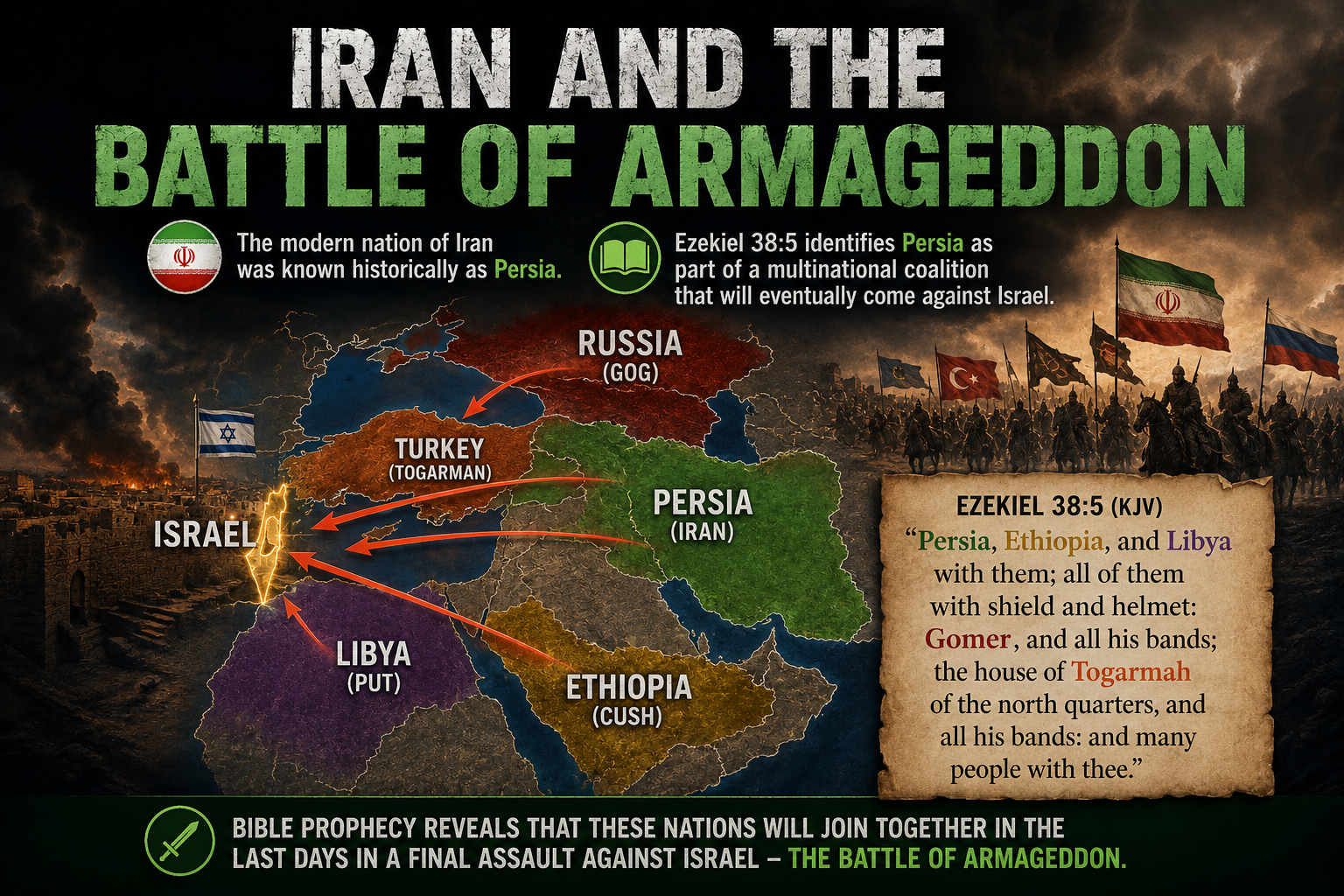
The modern nation of Iran was known historically as Persia.
Ezekiel 38:5 identifies Persia as part of a multinational coalition that will eventually come against Israel. The prophecy also names nations corresponding to regions associated with Russia, Turkey, Libya, and Ethiopia.
The attack described by Ezekiel is connected to the final gathering of nations against Israel that culminates in the Battle of Armageddon. With this understanding, we know with certainty that Iran will not be completely destroyed, regardless of how bleak things my currently appear for them. This does not mean they could not be severely damaged and weakened.
Iran’s participation in that future coalition means the country (even if it must rebuild after the current war with the United States) will continue to possess political, military, or strategic significance when the prophecy is fulfilled.
This does not mean Iran will escape military defeat in the years preceding Armageddon. A nation can suffer enormous battlefield losses while remaining capable of rebuilding, rearming, forming alliances, and participating in a later war.
It would therefore be unwise to conclude that present attacks will remove Iran from the prophetic picture. Scripture indicates that Persia (i.e., Iran) will remain identifiable and sufficiently consequential to join the future invasion against Israel.
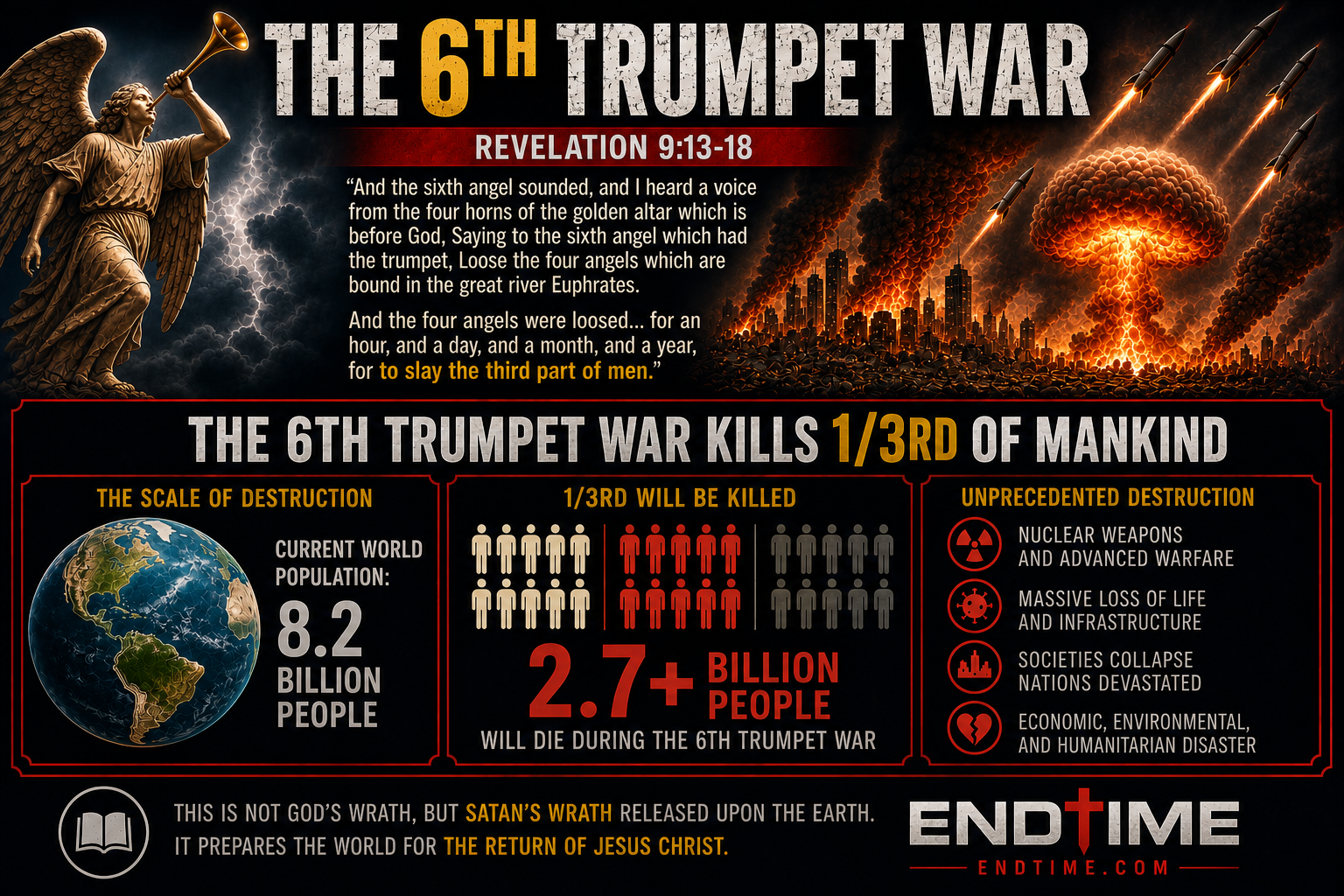
Could This Become the Sixth Trumpet War?
Revelation 9:13-21 describes the Sixth Trumpet War, an unparalleled conflict that results in the death of one-third of mankind.
That prophecy involves a massive army and a devastating release of destructive power associated with the Euphrates region. The conflict will be far greater than a conventional exchange between the United States and Iran.
The current war has not reached the magnitude described in Revelation 9.
Therefore, it should not presently be declared the Sixth Trumpet War.
However, the speed with which this confrontation has expanded illustrates how a regional crisis could involve numerous nations, strategic waterways, global energy markets, proxy forces, advanced weapons, and international military alliances.
Iran has attacked countries that host American forces.
The United States has assembled warships and aircraft throughout the region. Commercial shipping has been targeted. Other governments are being pressured to choose sides or assist in mediation.
These are not proof that the Sixth Trumpet has sounded, but they demonstrate the kind of interconnected geopolitical environment in which a much larger war could develop.
Reports claim that Russia recently sent its airborne command-post aircraft (which has now arrived) to Tehran; although that report has not been independently verified.
Other major nuclear powers , like Russia or China, becoming involved in the Iran conflict has the very real potential to bring about the Sixth Trumpet War of Revelation 9:13-21.
Whether this conflict eventually becomes part of the Sixth Trumpet War remains uncertain. The responsible conclusion is to watch carefully without claiming more than Scripture and verified events presently allow.
War, Peace, and the Coming Covenant
The Bible foretells that a future political leader will confirm a covenant with Israel and many other nations for seven years.
Daniel 9:27 states:
“And he shall confirm the covenant with many for one week.”
That covenant will begin the final seven-year period preceding the return of Jesus Christ.
Major peace agreements are often produced by major crises. When nations experience war, economic disruption, damaged infrastructure, civilian casualties, and the possibility of a wider confrontation, political leaders may become willing to consider diplomatic arrangements that previously seemed impossible.
The present conflict does not prove that the covenant of Daniel 9:27 is about to be signed.
However, prolonged warfare involving Iran, Israel, the United States, Gulf nations, and vital trade routes could intensify international demands for a comprehensive Middle East settlement.
A future agreement could eventually involve Israeli security, Arab recognition, regional trade, access to Jerusalem, Palestinian governance, international guarantees, and the management of religious sites.
Prophecy students should watch not merely for the end of a particular war, but for the diplomatic architecture that emerges afterward.

What Bible Prophecy Students Should Watch
The Expansion or Limitation of American Targets
The United States has so far emphasized military targets connected to missiles, drones, air defenses, naval operations, command centers, and coastal surveillance.
A decision to strike electrical grids, bridges, oil facilities, or other infrastructure could provoke a significantly broader Iranian response.
The distinction between a military campaign and a campaign against national infrastructure may determine whether this conflict remains constrained or moves toward total war.
Iranian Attacks on Gulf Nations
Iran’s attacks on Bahrain, Jordan, and Kuwait demonstrate that the confrontation is no longer confined to Iranian and American territory.
Further attacks on Saudi Arabia, Qatar, the United Arab Emirates, or other regional states could transform the conflict into a wider coalition war.
The Strait of Hormuz
Control of the strait remains the central economic and strategic issue.
Watch for changes in commercial shipping volume, insurance costs, naval escorts, tanker attacks, oil prices, and efforts by other nations to challenge or negotiate around the blockade.
Iran’s Regional Allies
Iran maintains relationships with armed groups and political movements across the Middle East.
The involvement of the Houthis, Hezbollah, Iraqi militias, or other Iranian-aligned forces could open new theaters of conflict and threaten shipping routes beyond the Strait of Hormuz, including the Red Sea.
Diplomatic Mediation
Pakistan and other nations have attempted to preserve negotiations.
Any serious peace initiative should be examined for its participants, guarantees, duration, enforcement mechanisms, and relationship to Israel.
Prophecy students should be especially alert to an agreement that involves Israel and many nations, but they should not identify a treaty as the covenant of Daniel 9:27 unless its characteristics align with the prophecy.
The Push for a Comprehensive Regional Agreement
A ceasefire is not the same as the prophesied covenant.
The agreement in Daniel 9:27 is confirmed for seven years and marks the beginning of the final prophetic period. The international community may negotiate numerous limited ceasefires, maritime agreements, security arrangements, or normalization treaties before that covenant is established.
Discernment requires attention to details, not merely dramatic headlines.
Final Thought
The latest strikes show how quickly an unstable region can move from ceasefire to renewed warfare.
For believers, the proper response is neither panic nor indifference.
Jesus instructed His followers to watch, pray, remain faithful, and understand the times. Current events should deepen our awareness, but Scripture must remain the foundation of our conclusions.
We cannot yet say where this war will lead. We can say with confidence that God has already revealed the ultimate outcome of human history.
Nations will rise, alliances will shift, wars will intensify, and political leaders will promise peace. Yet Jesus Christ will return, defeat the kingdoms that oppose Him, and establish His righteous government upon the earth.
Our responsibility is to remain spiritually prepared, grounded in truth, and committed to sharing the gospel while there is still time.
Sources:
The New York Times, live coverage of the U.S.-Iran conflict and the Strait of Hormuz, July 16, 2026. (New York Times)
Fox News, “US Intensifies Iran Strikes Amid Naval Blockade,” July 16, 2026. (Fox News)
U.S. Central Command, public releases concerning military operations against Iran, July 12-15, 2026. (AP News)
About the Author
 Bryan Smith serves as Content & Teaching Pastor at Endtime Ministries and has been part of the Endtime family for more than 25 years. He has been engaged in pastoral ministry for two decades, served as Academic Dean, Registrar, and Professor for Valor University, and is a frequent teacher of the Understanding the End Time class. Bryan holds a Bachelor of Arts (B.A.) in Theology, a Master of Arts (M.A.) in Leadership, has completed advanced studies in the history of prophecy through HarvardX’s certificate program with Harvard University, and is pursuing a Doctor of Ministry (D.Min.) in Biblical Studies. In addition to hosting The Bible Prophecy Show podcast, Bryan is a regular contributor to Endtime magazine and writes on the intersection of Bible prophecy, theology, and global current events.