Ebola Outbreak Surpasses 1,000 Cases in Congo
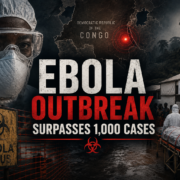 Health officials in the Democratic Republic of Congo have reported that the country’s Ebola outbreak has surpassed 1,000 confirmed cases, with more than 250 deaths attributed to the deadly virus. Medical teams have faced significant challenges containing the outbreak due to ongoing violence, population displacement, mistrust of health workers, and limited access to affected communities. Despite efforts by international health organizations and government agencies, the disease has continued to spread in parts of eastern Congo, raising concerns about regional stability and global health security.
Ebola remains one of the world’s most dangerous infectious diseases, with fatality rates that can reach as high as 90 percent in some outbreaks. While advances in treatment, vaccination, and public health responses have improved containment efforts in recent years, outbreaks continue to demonstrate how vulnerable populations remain to rapidly spreading diseases. The Congo outbreak serves as another reminder that pandemics and infectious diseases remain a persistent challenge in an increasingly interconnected world.
Prophetic Perspective
The Ebola outbreak is not a direct fulfillment of Bible prophecy. However, it reflects one of the conditions Jesus specifically said would characterize the period leading up to His return.
In Matthew 24, as Jesus answered His disciples’ questions about the signs of the end of the age, He warned of wars, famines, earthquakes, and pestilences occurring in various places. Luke’s parallel account records that there would be “great earthquakes in divers places, and famines, and pestilences” (Luke 21:11). The term pestilence refers to widespread disease, epidemics, and pandemics that affect populations on a large scale.
While outbreaks of disease have existed throughout human history, modern transportation and global connectivity allow infectious diseases to spread farther and faster than ever before. Events such as Ebola outbreaks, SARS, COVID-19, avian influenza, and other emerging health threats remind us that humanity remains vulnerable despite remarkable advances in medicine and technology.
Jesus did not present pestilences as isolated signs that would allow people to predict a specific date for His return. Rather, they are part of a broader pattern of conditions that would increase as the world approaches the culmination of God’s prophetic plan. Alongside wars, natural disasters, societal turmoil, and spiritual deception, recurring outbreaks of disease remind believers that the world is experiencing the birth pains Jesus described in Matthew 24:8, and the coming Abomination of Desolation being the significant marker.
For prophecy students, the noteworthiness is not simply the Ebola outbreak itself. It is the continuing pattern of global instability that Scripture said would characterize the last days. As disease outbreaks become more frequent, more globalized, and more disruptive, they provide another reminder that the world is moving toward the fulfillment of end-time prophecy.
At the same time, believers are called not to fear but to trust in God’s promises. Bible prophecy teaches that despite increasing challenges in the world, Jesus Christ remains in control, and His return will ultimately bring an end to sickness, suffering, and death.
Original Article:
https://www.cbsnews.com/news/ebola-congo-cases-top-1000-deaths-surpass-250/
About the Author
 Bryan Smith serves as Content & Teaching Pastor at Endtime Ministries and has been part of the Endtime family for more than 25 years. He has been engaged in pastoral ministry for two decades, served as Academic Dean, Registrar, and Professor for Valor University, and is a frequent teacher of the Understanding the End Time class. Bryan holds a Bachelor of Arts (B.A.) in Theology, a Master of Arts (M.A.) in Leadership, has completed advanced studies in the history of prophecy through HarvardX’s certificate program with Harvard University, and is pursuing a Doctor of Ministry (D.Min.) in Biblical Studies. In addition to hosting The Bible Prophecy Show podcast, Bryan is a regular contributor to Endtime magazine and writes on the intersection of Bible prophecy, theology, and global current events.

Latest Articles