
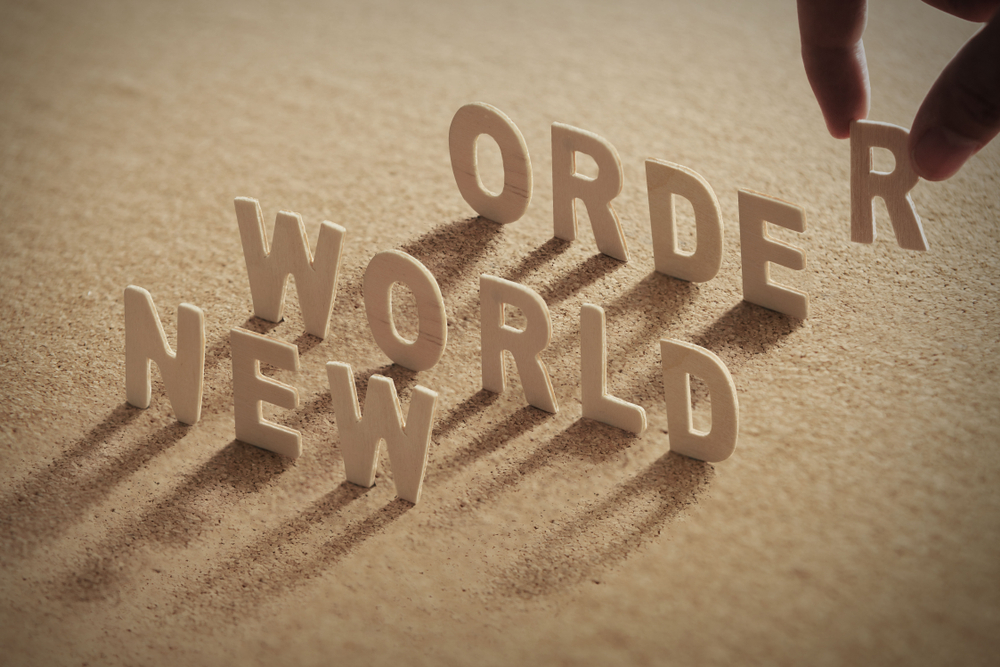
Crisis, Control, and Global Governance: The Road to the Antichrist System
The Globalist Endgame: Understanding the Push Toward World Government
 For decades, many people have struggled to make sense of the headlines. Why do policies seem to advance in the same direction regardless of which party holds power? Why do international organizations continue gaining influence over sovereign nations? Why do calls for global solutions grow louder with every crisis?
From a biblical perspective, these developments are not random. They are part of a long-term trend that aligns with prophecies concerning the rise of a global system that will ultimately be governed by the Antichrist.
The Bible foretells a world government, a world religion, and a global economic system. As Christians, we are called to understand the times and prepare ourselves spiritually for what lies ahead.
The Slow Erosion of National Sovereignty
In 1974, Richard N. Gardner, writing in Foreign Affairs, argued that world order would not be achieved through a sudden takeover. Instead, he proposed what he called an “end run around national sovereignty,” accomplished by gradually building international institutions and transferring authority to them piece by piece.
This strategy mirrors what many prophecy students have observed for years.
Rather than eliminating national governments overnight, global governance advances incrementally through organizations such as the United Nations, the World Bank, the International Monetary Fund, the World Trade Organization, and other supranational institutions.
The process is subtle. Individual policies may seem insignificant on their own, but collectively they move nations toward greater dependence on global systems and away from independent self-government.
The Illusion of Political Choice
Many Americans view politics as a battle between two opposing parties. Yet regardless of election outcomes, certain trends often continue: expanding government, increasing debt, endless foreign entanglements, and growing bureaucratic control.
Historian Carroll Quigley famously observed that the two major parties should remain similar enough that voters could change leadership without fundamentally changing policy direction.
Whether one agrees with that assessment or not, many citizens have become frustrated by the perception that major institutions continue moving in the same direction despite changing administrations.
The Bible warns believers not to place their hope in political systems but in God’s kingdom. Earthly governments rise and fall, but God’s prophetic plan continues unfolding exactly as Scripture foretold.
The Spiritual Battle Behind Globalism
At its core, the struggle is not merely political.
The Apostle Paul wrote:
“For we wrestle not against flesh and blood, but against principalities, against powers, against the rulers of the darkness of this world, against spiritual wickedness in high places.” — Ephesians 6:12
The Bible reveals that the final world government will not simply be a political structure. It will be empowered by spiritual forces opposed to God.
From the Tower of Babel to the final kingdom described in Revelation, mankind has repeatedly sought unity apart from God. The goal has always been the same: replacing God’s authority with man’s authority.
The Tower of Babel represented humanity’s first organized attempt at a one-world system. God intervened by confusing the languages and scattering the nations.
Today, many globalist initiatives seek to reverse that division by creating political, economic, and cultural systems that transcend national boundaries.
While advocates may frame these efforts as progress, Christians recognize a deeper spiritual dimension at work.
The Rise of Technocracy
Another significant development is the emergence of technocracy—the belief that society should be managed by experts using technology, data, and centralized systems.
Advances in artificial intelligence, digital identification systems, biometric technology, and programmable currencies are transforming how governments and institutions operate.
Several trends deserve close attention:
1. Digital Currency
Central Bank Digital Currencies (CBDCs) could give governments unprecedented control over financial transactions.
Unlike traditional cash, programmable digital money could potentially be monitored, restricted, or controlled in real time.
2. Transhumanism
Technologies that merge humans with machines are advancing rapidly. Neural implants, brain-computer interfaces, genetic engineering, and human enhancement technologies are no longer science fiction.
3. Social Credit Systems
Systems that reward compliance and punish dissent are already emerging in various forms around the world. Financial access, employment opportunities, and public participation can increasingly be tied to digital profiles and behavioral metrics.
4. Artificial Intelligence
AI has become the management layer capable of processing enormous amounts of data. Governments and corporations now possess unprecedented abilities to monitor, predict, and influence human behavior.
Viewed together, these developments create a framework that closely resembles the type of global control system described in Bible prophecy.
The Financial Infrastructure of Global Governance
Economic control has always been central to global power.
Institutions such as the Bank for International Settlements, the International Monetary Fund, and the World Bank play significant roles in shaping global monetary policy.
At the same time, growing discussions surrounding digital currencies and international financial coordination continue moving the world toward greater economic integration.
The Book of Revelation foretells a time when economic participation will become tied to allegiance to a global system.
While we are not yet living under the Mark of the Beast, the infrastructure that could enable such a system is increasingly visible.
Crisis as a Catalyst
History demonstrates that major crises often accelerate political change.
Wars, economic collapses, pandemics, climate emergencies, and mass migration events frequently lead to calls for expanded government authority and international cooperation.
The principle is simple: people are often willing to surrender freedoms during times of fear if they believe doing so will provide security.
This pattern has repeated throughout history and continues today.
From a prophetic perspective, every major crisis creates opportunities for global institutions to expand their influence and move humanity closer to centralized governance.
What Should Christians Do?
The purpose of understanding these developments is not fear.
It is preparation.
Jesus warned His followers to watch and discern the signs of the times. The goal is not panic but spiritual awareness.
As global systems continue developing, believers must remain grounded in Scripture, committed to truth, and focused on God’s kingdom above all else.
The prophet Daniel declared:
“The people that do know their God shall be strong, and do exploits.” — Daniel 11:32
The world may be moving toward the fulfillment of end-time prophecy, but God’s people are not called to fear the future. We are called to understand it.
As the push toward global governance accelerates, Christians must recognize what is happening, share biblical truth with others, and remain faithful to Jesus Christ.
Bible prophecy is unfolding before our eyes. The question is not whether these events will occur. The question is whether we will recognize them when they do.