
The Road to the Final Seven Years? Inside the 20-Point Plan Changing Everything
Is the Gaza Ceasefire Setting the Stage for Bible Prophecy?
By Dave Robbins, Endtime Ministries
 When world leaders sit down to cut peace deals, most of the world just sees politics, power, and headlines.
But if you understand Bible prophecy, you know there is much more at stake.
In recent years we’ve watched a dramatic series of moves—from the U.S. embassy relocation to Jerusalem, to the Abraham Accords, to a U.S.-brokered hostage-and-ceasefire deal involving Israel and Hamas—that may not yet be the prophesied peace agreement, but could very well be paving the road directly toward it.
In this article, I want to walk you through that story, step-by-step, and then explain why we at Endtime are watching these developments so closely from a prophetic perspective.
From Jerusalem to “Peace to Prosperity”
The recent saga doesn’t begin in Gaza. It goes back to a series of calculated decisions during President Donald Trump’s first term.
He understood something basic about negotiations: you cannot simply drag Israel and the Palestinians to a table, lock the doors, and demand they stay until a deal is finished. That kind of “nose ring” diplomacy fails every time.
Instead, Trump took a different path.
-
He moved the U.S. embassy to Jerusalem, recognizing it as Israel’s capital and fulfilling a long-standing promise.
-
At the same time, his team kept working closely with Arab nations behind the scenes.
In June 2018, his senior adviser and son-in-law Jared Kushner, along with special envoy Jason Greenblatt, began a tour of the region. They met with leaders in Jordan, Saudi Arabia, Egypt, Qatar, and Israel.
Their pitch was not, “Come to a peace table or else.”
Their pitch was: “Let’s talk about economic development. Let’s talk vision.”
They painted a picture where places like Gaza could become thriving economic hubs and resort destinations. It was an outside-in strategy—getting Arab states on board first, instead of starting with the deadlocked Israeli-Palestinian track.
From a political standpoint, it was brilliant.
In March 2019, Trump went further, signing a proclamation recognizing Israel’s sovereignty over the Golan Heights—territory captured from Syria in the 1967 Six-Day War. That decision strengthened Israel’s security and bound the U.S.–Israel relationship even tighter, despite international criticism.
Meanwhile, the administration was crafting its broader peace proposal, eventually called the “Peace to Prosperity” plan. The economic portion was unveiled in June 2019 in Bahrain, promising roughly $50 billion in investments for Palestinians and neighboring states to improve infrastructure, jobs, and trade.
The Palestinian leadership rejected it outright, calling it a bribe that ignored political issues such as statehood. But many ordinary Palestinians saw the potential and liked the vision.
Trump did not throw up his hands and quit. Remember, he wrote The Art of the Deal. He kept pressing forward.
On January 28, 2020, the full Peace to Prosperity plan was released—a 181-page document presented at the White House with Israeli Prime Minister Benjamin Netanyahu present, but without Palestinian representatives.
The plan:
-
Envisioned a Palestinian state with limited sovereignty
-
Allowed Israel to annex certain parts of the West Bank, including settlements and the Jordan Valley
-
Kept Jerusalem as Israel’s undivided capital
-
Proposed a Palestinian capital on the outskirts of Jerusalem
-
Included maps showing a fragmented Palestinian territory connected by tunnels and bridges
Palestinian leaders rejected the plan out of hand, claiming it was biased toward Israel—even though no Palestinian state has ever existed and the proposal would have effectively created one.
Yet something had shifted: some Arab states no longer automatically lined up behind the Palestinian position. A “muted response” from them signaled a move away from automatic solidarity and toward a more pragmatic posture. The old fallback—the 2002 Arab Peace Initiative—was no longer the unchallenged gatekeeper.
Trump was quietly removing the Palestinians’ regional veto power.
The Abraham Accords: A Regional Earthquake
The real breakthrough came later that same year.
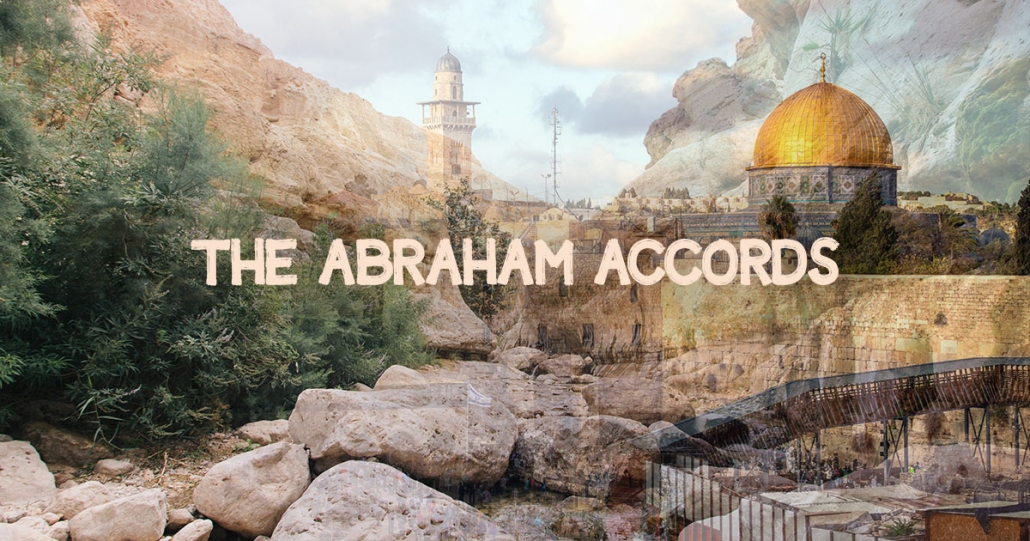
On August 13, 2020, Trump announced a normalization agreement between Israel and the United Arab Emirates—the first such deal between Israel and an Arab country in 26 years. Bahrain soon followed on September 11, and on September 15, 2020, the Abraham Accords were signed at the White House.
Later, Sudan joined on October 23, and Morocco on December 10, paired with U.S. recognition of Morocco’s claim over Western Sahara.
By the end of Trump’s first term, four Arab nations had normalized ties with Israel. The Accords emphasized economic ties, tourism, and security cooperation—and notably, they bypassed the Palestinian issue.
Palestinian leaders looked on, suddenly aware that their Arab neighbors were stepping into open relationships with Israel without waiting for a final status agreement.
Regionally, Iran and the Palestinians found themselves more isolated than ever.
A Second Trump Term and a New Gaza Crisis
Trump left office on January 20, 2021, but his influence on Middle East dynamics lingered.
Fast-forward to November 5, 2024. In this scenario, President Trump wins a second, non-consecutive term, defeating Vice President Kamala Harris. He returns to office on January 20, 2025, pledging to:
-
Expand the Abraham Accords
-
Address ongoing conflicts, especially the Israeli–Hamas war that erupted on October 7, 2023 under the Biden administration
By early 2025, Iran is under renewed sanctions. Hezbollah is weakened by related clashes. The administration sees a window of opportunity and pushes for a comprehensive deal involving Gaza.
What follows is a remarkable chain of events—from a controversial Israeli missile strike in Doha, Qatar, to a dramatic diplomatic climax in Sharm El-Sheikh, Egypt—ultimately producing a hostage-ceasefire agreement that many believed was impossible.
This is not the prophesied peace agreement that starts the final seven years, and I want to be very clear about that.
But prophetically, it could be a major stepping stone.
The Doha Strike and an Unlikely Apology
The spark came on September 9, when Israel launched a missile strike in Doha, targeting Hamas leaders.
Prime Minister Benjamin Netanyahu framed it as a clear message: “You can run, you can hide, but we’re going to get you.” Standing beside U.S. Secretary of State Marco Rubio, he doubled down—even as the strike produced limited results and fueled outrage across the Arab world.
The backlash strained alliances and left hostage families afraid that their loved ones were being pushed to the sidelines.
Diplomatically, it looked like a disaster.
But just weeks later, the story flipped.
In a stunning scene at the Oval Office, Netanyahu read a scripted apology to Qatar’s Prime Minister Mohammed Abdulrahman Al Thani—an apology orchestrated by President Trump himself.
Trump’s logic was simple: “I’m trying to strike a deal. I need Qatar on board. You’ve got to apologize.”
Netanyahu resisted at first, but eventually complied. That single act helped bring Qatar firmly back into the process.
Behind the scenes, Steve Witkoff and Jared Kushner saw opportunity. The Doha strike had exposed cracks in Hamas’s resolve. Gazans, exhausted by war, were increasingly blaming Hamas—not just Israel—for their suffering. Hamas’s hostages, once considered powerful bargaining chips, were becoming a liability in world opinion.
Working with Qatar’s Al Thani, they drafted a 20-point proposal built on previous hostage deals and war-ending frameworks.
A 20-Point Plan, a Ceasefire, and a Turning Point
On September 29, Trump and Netanyahu stood together at the White House to unveil a plan that demanded real courage:
-
An immediate end to the war
-
A phased Israeli withdrawal from Gaza
-
A potential pathway to a Palestinian state
That last point is crucial.
The 20-point plan reportedly included:
-
Point 18 – an interfaith initiative to bring the two faiths into greater cooperation
-
Points 19 and 20 – language describing a pathway to a Palestinian state
If such a pathway develops into a formal agreement with the five biblical characteristics we’ve taught about for years—especially relating to Israel, the West Bank, and specifically biblical Judea and Samaria—then we would be able to say, “The final seven years have begun.”
We are not saying that now.
But from a prophetic viewpoint, we cannot ignore a plan that openly discusses a Palestinian state, widespread Arab support, and international involvement—especially when Europe and leaders like France’s President Macron are visibly present at signing ceremonies in Sharm El-Sheikh.
This is a very big deal, prophetically speaking.
Inside the Ceasefire Deal
Let’s fast-forward to the negotiations themselves.
Talks in Sharm El-Sheikh on October 7–8 moved quickly. Trump personally phoned in to emphasize his commitment to key principles, including Israel’s eventual withdrawal from Gaza.
The breakthrough came when negotiators agreed to separate the hostage release from the more contentious postwar questions. First: get the hostages home. Then tackle Gaza’s future.
By Wednesday evening, after roughly 20 hours of negotiations, a deal was almost done. Witkoff and Kushner, on the ground in Sharm El-Sheikh, worked alongside mediators while Israeli and Hamas delegations sat in separate ballrooms.
Within days, Israel and Hamas signed off on a U.S.-brokered ceasefire, launching Phase One of the agreement. The formal signing took place on October 9 in Sharm El-Sheikh, with the former president and world leaders looking on.
Picture it: Qatari and Israeli negotiators embracing—just weeks after Israel had bombed Doha. That is the power of leverage and influence at the highest levels.
The initial phase of the deal includes:
-
An immediate halt to hostilities
-
Release of all remaining living hostages by Hamas
-
Redeployment of Israeli troops out of parts of Gaza
-
Humanitarian aid flowing into Gaza
-
Early steps toward reconstruction planning
-
Discussion of future demilitarization
But we must not romanticize this moment. Sporadic clashes are already flaring. Enforcement is the critical challenge. Hamas remains an Iranian-backed terrorist organization committed to Israel’s destruction. Their ideology has not changed.
Phase One is fragile—and any misstep could unravel months of work.
Looking ahead, the next phase—determining Gaza’s long-term status—is even more complex. The United States is reportedly preparing to send CENTCOM soldiers to join an international stabilization force (ISF), possibly led by countries like Indonesia, to replace the IDF in Gaza.
Disarming Hamas, potentially by force, remains on the table. Publicly, Hamas is resisting, but as one Trump aide noted, “It’s about what they say privately and what they actually do.”
Could This Revive the Abraham Accords—and Lead to the Prophesied Agreement?
If this deal holds, it could breathe new life into the Abraham Accords, potentially bringing heavyweights like Saudi Arabia and Qatar into deeper normalization with Israel.
Think about what that would mean:
-
Saudi Arabia wields enormous influence over the Palestinians.
-
If Riyadh and other major Arab capitals normalize with Israel and reap economic benefits, they could put massive pressure on Palestinian leaders to follow suit.
-
Imagine a scenario where nearly all the region’s major players are on board—except the Palestinians. The pressure to sign a final agreement with Israel would be intense.
Now layer Bible prophecy over that picture.
Daniel 9:27 tells us the Antichrist will “confirm the covenant with many”. We’ve long taught that this refers to a final Israeli-Palestinian peace agreement involving Israel, the West Bank (Judea-Samaria), and international guarantees.
Is it possible—what if—a future world leader were to say to the Palestinians:
“Normalize relations with Israel. Join the Abraham Accords. Sign this peace agreement. Allow Israel to build its third temple. In return, you will be recognized as an official state and be granted full voting membership in the United Nations.”
If the Palestinians signed such a deal, with the Arab world and the international community behind it, and the man who got it across the finish line then rose to lead the world governing system—that could be the moment the final seven years begin.
Is that exactly how it will play out? We cannot say for sure. These details are speculative.
But what is not speculative is this:
A prophesied peace agreement is coming.
And the developments we’re watching in Gaza, Sharm El-Sheikh, and the broader region look increasingly like the road leading right up to it.
Two Next Events on God’s Prophetic Timeline
According to Scripture and the pattern we’ve taught for decades, the next two major prophetic events on God’s timeline are:
-
An Israeli–Palestinian peace agreement specifically involving the West Bank, biblical Judea and Samaria
-
World War III—a global conflict we believe will kill one-third of mankind (Revelation 9)
Will Iran attempt to derail the current momentum by igniting a wider regional war? Will a larger conflict break out to stop forward progress on a peace deal?
It’s entirely possible.
Iran is watching these developments—and the growing cooperation between Israel and Arab nations—with alarm. The desire to “destroy these people” and prevent Israel’s consolidation in the region is central to the Iranian regime’s ideology.
That’s why we are watching both the peace track and the war track simultaneously.
Why Endtime Is Focusing on This So Intensely
If you’ve wondered why we’re doing program after program on these developments—this is why.
We are not just interested in geopolitics. We are watching for the prophetic markers that signal:
-
The beginning of the final seven years
-
The approach of World War III
-
The march toward the Second Coming of Jesus Christ
The peace agreement prophesied in Scripture is tied to a 2,500-year-old prophecy and includes a specific timeline. Once that agreement is in place—with the biblical characteristics we’ve outlined—you will literally be able to start the final seven-year countdown to the return of Jesus.
That is why we pay such close attention to any plan that:
-
Mentions a Palestinian state
-
Involves Judea and Samaria
-
Includes international guarantees
-
Touches on Jerusalem and a possible third temple
We are living in prophetic times, and we dare not sleep through them.
How You Can Prepare and Stay Informed
Satan and the elites of this world do not want you to understand the prophetic timeline. Confusion is one of his greatest weapons.
But God has given us His Word so that we can:
-
Pinpoint where we are in the end time
-
Understand how we fit into His plan
-
Live with hope instead of fear
To help you do that, we’ve produced several resources:
-
“America’s God-Given Role in Bible Prophecy” – Understand why we believe the United States is mentioned in Scripture and how America will stand with Israel against the world government all the way to the Second Coming.
-
“The Future According to Bible Prophecy” – A clear, comprehensive walk-through of the prophetic timeline leading to the return of Jesus.
-
Endtime Prophecy Conferences – Join me in person as we unpack these events, answer questions, and prepare together for what’s coming.
You can learn more at ENDTIME.COM, call 800-ENDTIME (800-363-8463), or visit endtime.com/events to see when I’ll be in a city near you.
We are watching, and we want you to be watching with us.
These events are not random. They are moving history toward the greatest moment the world has ever known: the Second Coming of Jesus Christ.
Stay informed. Stay prayerful. Stay ready.